Charles IV Quotes
We decree also that no count, baron, noble, vassal, burgrave, knight, client, citizen, burgher, or other subject of the churches of Cologne, Mainz, or Trier, of whatever status, condition, or rank, shall be cited, haled, or summoned to any authority before any tribunal outside of the territories, boundaries, and limits of these churches and their dependencies, or before any judge, except the archbishops and their judges....
This was often referred to as “The Golden Bull.” The Church clerics formed the judiciary for civil as well as religious matters. In time Catholic Europe would separate the judicial authority between religious and civil courts, the final step was to bring clerics and the church under the civil control and authority which was fought vehemently by the church which for years tried to retain at least the right to try priests and other church officials even for civil crimes.
Charles IV, 1316-1378, French King & Holy Roman Emperor, Dictum, 1356
Sourced by: Eigen's Political and Historical Quotations

The council was not only fearful of Protestant preaching, but hereby granted a local monopoly within the Catholic Church to the local Bishop.

The Supreme Court limited authority of religious courts to matters where both parties belonged to the religion. Jewish courts had tried to assert the power to annul mixed marriages where only one party was Jewish on the grounds that orthodox Jews oppose mixed marriage. Conflict between religious & civil courts has existed ever since there have been civil courts. Historically there was no separation & the Religious Courts in ancient Israel, early Christendom & Islam had universal jurisdiction. As Europe’s civil authorities wrested authority from religious courts, modernity has diminished or eliminated the legal jurisdiction of religious courts. Even in the United States there are courts operated by some religions; if members wish to voluntarily submit their disputes, they can. In most Islamic countries & Israel there are religious courts which have some authority over family & purely religious matters & in Muslim theocracies the religious courts are the only courts as in ancient times.

i.e., a clergyman representing a congregation The theory of this particular expulsion applied not to clergy in general, but to clergy who represented a Congregation. In the absence of strict separation of church and state, clergy representing congregations had representative and legal roles in other aspects of the government and therefore represented a problem of separation of powers within the government. The same logic, for example prohibited Sheriffs and Tax Officials from the House of Commons as well as Judges sitting in the Lords. With strict separation of church and state however, the separation of powers argument does not hold, and hence there is no such current prohibition. However, at the end of the 20th century, the Roman Catholic and some other religious institutions had reached the conclusion that clerics serving as elected representatives to various civil legislative bodies potentially had an inherent conflict of interest and divided loyalty and banned the practice from the religious end although the civil laws did not preclude it.


This was before the state had officially sanctioned and accepted the church. Most of the institutions were pagan and the kings had subjects of both religions with Christianity not yet dominant. Yet among Christians, the Church had government temporal power, even before the church was allied with the state.


This concept is not terribly different from the concept of the theocracy of the Islamic government of Iran in the 21st century. There is a civil government but it serves and is “under the direction of the spiritual power.”

Curtis had at first arrested Samuel B. McPheeters a St. Louis preacher for pro-Southern sermons. Lincoln had countermanded the arrest order. Curtis released the pastor, but prohibited him from preaching in his own church. It took Lincoln many months to find this out and Lincoln then instructed this second instruction to Curtis not to continue the ban.


The struggle in the Catholic Church reached an amazing state. Just after a new pope, Martin V, had been elected the Council of Bishops at Constance came up with this notion which placed their views above those of the Pope under the theory that this particular council derived its power and authority directly from Christ while the pope was only God’s “vicar on earth.” The struggle was somewhat akin to the inevitable struggle for power between an executive branch and a legislative branch. The Council’s ascendancy didn’t last very long and was repudiated by successive popes.

First Irish Bishop in the United States and the First Catholic Cardinal of New York. Major anti-draft riots had broken out in New York City. Many of these were led by poor Catholics who resented the fact that they had to fight and perhaps die while the rich could be exempted by paying $300. Many Negroes and others were murdered, homes of the wealthy were sacked, and the militia had to be called out to restore order.
Bishop Ames had been appointed by the war department to take charge of all the Christian churches in the Southern states as they were defeated. The reason is that most Southern clerics were advocates of the rebellion. However many Northern churches, especially those in border states also contained ministers who were not only preaching treason but also aiding the Southern cause. The President thought that the War Department’s order gave Ames authority over all churches where the minister aided the rebellion. So he wrote to Ames limiting the authority. After the President was assured that Ames authority would only extend to Southern churches that had been in the rebellion, Lincoln allowed Ames to appoint ministers and control churches. This is the only time in American history that the Federal government actually controlled churches directly.

For those who doubt that there was intended a rigid separation between church and state, they have but to contemplate this passage. However, at about the same time, the State of South Carolina moved in its constitution in an opposite direction. See {612573}. When the framers of the Constitution met in 1787 in Philadelphia the separation of church and state issue was not really resolved and awaited the Bill of Rights where the separatists won out.

The Pope separates the church from the civil law to a degree that is a rarity amongst religions. Even Catholic Pope John Paul II who prohibited priests from holding political office always saw Papal and clerical influence on civil law making and interpretation as a fundamentally important role.


This notice of Excommunication was promulgated to the Catholic clergy in Ireland in May of 1538. It required all Roman Catholic leaders to size the property of Protestants or Catholics who sympathized with them. Those who did were then regarded as traitors by the Protestant King. The anti-Protestant feeling culminated with the massacre of about 100 Protestants who were drowned in Bann a few years later.
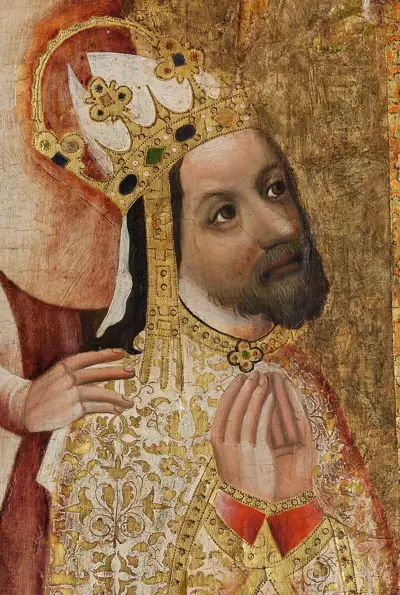
Charles IV, was the first King of Bohemia to become Holy Roman Emperor. He was a member of the House of Luxembourg from his father's side and the Czech House of Přemyslid from his mother's side; he emphasized the latter due to his lifelong affinity for the Czech side of his inheritance, and also because his direct ancestors in the Přemyslid line included two saints.
