Ayn Rand Quotes
Litigants obey the verdict of a tribunal solely on the premise that there is an objective rule of conduct, which they both accept.
Ayn Rand, 1905-1982, Writer & Philosopher, Atlas Shrugged, 1957
Sourced by: Eigen's Political and Historical Quotations


Islam was not very strong at this point and the followers of Muhammad were relatively few and Medina area contained Arab Non-Believers, Jews as well as the new Muslims. Muhammad drew up this document and got the non Muslims to agree to it. What is fascinating is that they bought into the idea that Muhammad would be the judge and final arbitrator of all disputes that were not resolved locally. The non Muslims agreed to this because Muhammad had been judging disputes for several years for those who would submit their cases to them. In a time of inconsistency, corruption, capriciousness and arbitrariness, Muhammad had developed a remarkable reputation for fairness, consistency, objectivity, and complete honesty. He could not be bought as most judges were at the time. He simply had demonstrated that he was the best man for the job.

This document was a type of Magna Carta but far earlier.


Baker led the legal team for George W. Bush and had filed numerous lawsuits including to the U. S. Supreme Court.


Bruce is one of the few American Comedians to so offend the political establishment that he was constantly legally harassed throughout his career. He was actually criminally convicted in New York for obscenity. In 2003 he was posthumously pardoned by the New York Governor, the first posthumous pardon in state history.

The Senator was arguing against a bill to correct an aspect of the immigration law where infants and very young clildren are broght to the United States by parents who entered illegally. The children grow up in the United States—the only country and home that they have ever known. American law required that they be deported to “their countries” which they have no memory of and many do not even speak the language or know the culture. Sessions, is an example of the view that law defines justice. Therefore laws cannot be unjust nor can enforcing the law. Opponents point out that even in the United States we have, in earlier times, “enforced the law” which we came to regret and see as an injustice. The Fugitive slave laws, the Southern racial discrimination laws, and the law allowing Japanese American Citizens to be interned and lose their land during WWII are a few examples of laws, the enforcement of which is seen by most Americans as having been unjust. The execution of “witches” in early America was in conformity with the law.


Some democratic cultures are very distrustful of government bureaucracies and prefer to resolve conflicts through the courts where the process in in general much more transparent. The U. S. is not the only example. Israel is even more litigious.


Judges were commonly granting injunctions against unions that were boycotting companies, which was then against the law. However, no judge had ever given an injunction against a company to stop them from boycotting individual workers who were known union organizers. Taft, who had a distinguished career as a Judge earlier in his career shocked the business world and delighted organized labor. Considered politically, a Republican running for President publicly advocated a new right and protection for labor organizing, when his party was supposed to protect companies against Labor. Taft however, was not an ideologue, but was a very fair man, and to him this particular issue was simple. Veteran politicians thought that he should have ducked the question, as he would offend much of the Republican base, but he was used to that being the number 2 man in Theodore Roosevelt’s Administration.

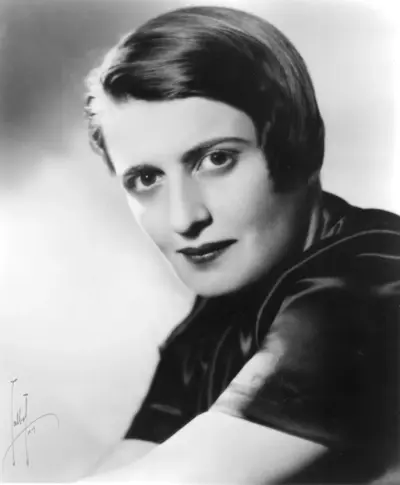
Ayn Rand was a Russian-American writer and philosopher. She is known for her two best-selling novels, The Fountainhead and Atlas Shrugged, and for developing a philosophical system she named Objectivism. Born and educated in Russia, she moved to the United States in 1926. She had a play produced on Broadway in 1935 and 1936. After two early novels that were initially unsuccessful, she achieved fame with her 1943 novel, The Fountainhead. In 1957, Rand published her best-known work, the novel Atlas Shrugged. Afterward, she turned to non-fiction to promote her philosophy, publishing her own periodicals and releasing several collections of essays until her death in 1982.
