Benjamin N. Cardozo Quotes
Justice is determined by the personality of the judges.
Benjamin N. Cardozo, 1870-1938, Supreme Court Justice, Quoted on C-SPAN Afterwards, July 10, 2010
Sourced by: Eigen's Political and Historical Quotations


In most of the world this is an accepted truism. However, where there is judicial independence as in the United States, Israel, Norway, England and other countries, those who appoint judges have little or no control over a judiciary that has lifetime tenure and a tradition of non-interference. The influence is limited to the appointment of a judge with a particular philosophy. However, in some countries, not only do the courts follow the lead of the government but if they do not the judges themselves might be jailed or worse. Borelli’s principle therefore holds there.


Islam was not very strong at this point and the followers of Muhammad were relatively few and Medina area contained Arab Non-Believers, Jews as well as the new Muslims. Muhammad drew up this document and got the non Muslims to agree to it. What is fascinating is that they bought into the idea that Muhammad would be the judge and final arbitrator of all disputes that were not resolved locally. The non Muslims agreed to this because Muhammad had been judging disputes for several years for those who would submit their cases to them. In a time of inconsistency, corruption, capriciousness and arbitrariness, Muhammad had developed a remarkable reputation for fairness, consistency, objectivity, and complete honesty. He could not be bought as most judges were at the time. He simply had demonstrated that he was the best man for the job.
At the time he was not an official of the bar association.


Many of our Founding Fathers held the view that the Jurors should decide not only about the facts but also they have the final decision on the law. The concept of the jury not following the judge’s interpretation and instructions as to the law is called Jury Nullification of which many of the founders approved. In modern times however, most states require the jury to accept the judge’s instructions as to the law, and the Jury’s only role is to decide on the facts. Maryland is the only state left which allows the jury to make the final decision on the law as well as the facts. However, many jurors will silently nullify the Judges instructions and vote accordingly as jurors need not explain their reasoning in most jurisdictions. See {641742}, {590841}, {591140} & {591139} for similar views by other Founding Fathers.

Judges were commonly granting injunctions against unions that were boycotting companies, which was then against the law. However, no judge had ever given an injunction against a company to stop them from boycotting individual workers who were known union organizers. Taft, who had a distinguished career as a Judge earlier in his career shocked the business world and delighted organized labor. Considered politically, a Republican running for President publicly advocated a new right and protection for labor organizing, when his party was supposed to protect companies against Labor. Taft however, was not an ideologue, but was a very fair man, and to him this particular issue was simple. Veteran politicians thought that he should have ducked the question, as he would offend much of the Republican base, but he was used to that being the number 2 man in Theodore Roosevelt’s Administration.


The judiciary in the American system must give deference to the executive and legislative branches and interfere only when there is a violation of the Constitution. Many of the laws may well be viewed as bad policy by the judge, or in some case, may be unjust. The judge however cannot interfere just because he is dealing with bad or unjust laws. So Judge Scalia points out that the judge functioning properly in the American system will find that he personally does not like the consequences of his own opinions.
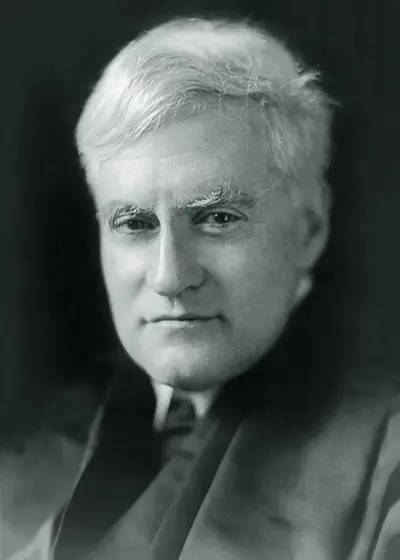
Benjamin Nathan Cardozo was an American jurist who served on the New York Court of Appeals and later as an Associate Justice of the Supreme Court. Cardozo is remembered for his significant influence on the development of American common law in the 20th century, in addition to his philosophy and vivid prose style. Cardozo served on the Supreme Court six years, from 1932 until his death in 1938. Many of his landmark decisions were delivered during his eighteen-year tenure on the New York Court of Appeals, the highest court of that state.
