Harlan F. Stone Quotes
The law itself is on trial in every case as well as the cause before it.
Harlan Fiske Stone, 1872-1946, Chief Justice of the U. S. Supreme Court, U. S. Attorney General (Republican), Quoted in Harris v. State, 632 So. 2d 503, 543 (Ala. Crim. App.) 1992
Sourced by: Eigen's Political and Historical Quotations

The Senator was arguing against a bill to correct an aspect of the immigration law where infants and very young clildren are broght to the United States by parents who entered illegally. The children grow up in the United States—the only country and home that they have ever known. American law required that they be deported to “their countries” which they have no memory of and many do not even speak the language or know the culture. Sessions, is an example of the view that law defines justice. Therefore laws cannot be unjust nor can enforcing the law. Opponents point out that even in the United States we have, in earlier times, “enforced the law” which we came to regret and see as an injustice. The Fugitive slave laws, the Southern racial discrimination laws, and the law allowing Japanese American Citizens to be interned and lose their land during WWII are a few examples of laws, the enforcement of which is seen by most Americans as having been unjust. The execution of “witches” in early America was in conformity with the law.


This document was a type of Magna Carta but far earlier.


She was a judge before she had been a member of Congress.

Watkins was the first Dallas County Black DA. He was being interviewed because DNA testing proved that a man who had served 30 years in prison for rape and robbery, could not have committed the crime, and he had just been released. Watkins quotation was very significant because it set forth a philosophy that while extant in other areas of the country is almost unheard of in Texas, where there have been more innocent men convicted than in any other state. DAs in Texas usually fight every attempt to examine old evidence with modern tools.


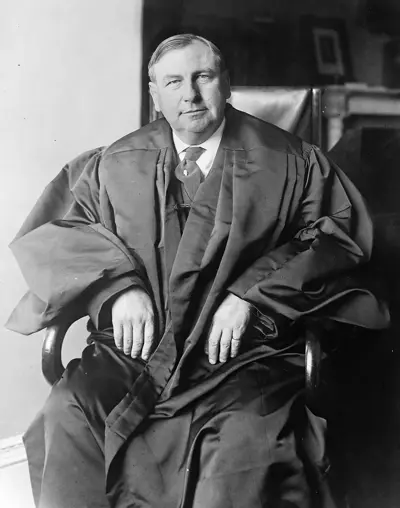
Harlan Fiske Stone was an American lawyer and jurist who served as an Associate Justice of the U.S. Supreme Court from 1925 to 1941 and then as the Chief Justice of the United States from 1941 until his death in 1946. He also served as the U.S. Attorney General from 1924 to 1925 under President Calvin Coolidge, with whom he had attended Amherst College as a young man. His most famous dictum was: "Courts are not the only agency of government that must be assumed to have capacity to govern."
