Charlemagne Quotes
Judges shall judge justly, according to the written law and not according to their own judgment.
This document was a type of Magna Carta but far earlier.
Charlemagne, 742-814, French King Charles, First Christian King & Holy Roman Emperor, Capitulary Issued in the Year 802
Sourced by: Eigen's Political and Historical Quotations


She was a judge before she had been a member of Congress.


The judiciary in the American system must give deference to the executive and legislative branches and interfere only when there is a violation of the Constitution. Many of the laws may well be viewed as bad policy by the judge, or in some case, may be unjust. The judge however cannot interfere just because he is dealing with bad or unjust laws. So Judge Scalia points out that the judge functioning properly in the American system will find that he personally does not like the consequences of his own opinions.


The Senator was arguing against a bill to correct an aspect of the immigration law where infants and very young clildren are broght to the United States by parents who entered illegally. The children grow up in the United States—the only country and home that they have ever known. American law required that they be deported to “their countries” which they have no memory of and many do not even speak the language or know the culture. Sessions, is an example of the view that law defines justice. Therefore laws cannot be unjust nor can enforcing the law. Opponents point out that even in the United States we have, in earlier times, “enforced the law” which we came to regret and see as an injustice. The Fugitive slave laws, the Southern racial discrimination laws, and the law allowing Japanese American Citizens to be interned and lose their land during WWII are a few examples of laws, the enforcement of which is seen by most Americans as having been unjust. The execution of “witches” in early America was in conformity with the law.


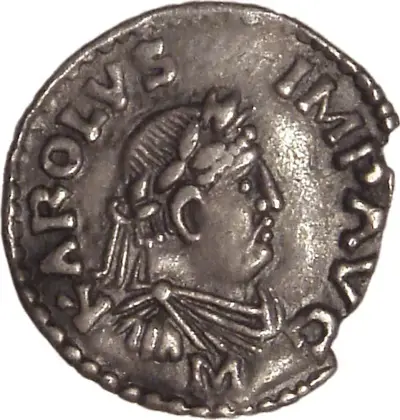
Charlemagne (English: /ˈʃɑːrləmeɪn, ˌʃɑːrləˈmeɪn/; French: [ʃaʁləmaɲ]) or Charles the Great; from the Latin Carolus Magnus, numbered Charles I, was the King of the Franks from 768, the King of the Lombards from 774, and the Emperor of the Romans from 800. During the Early Middle Ages, he united the majority of western and central Europe. He was the first recognised emperor to rule from western Europe since the fall of the Western Roman Empire around three centuries earlier. The expanded Frankish state that Charlemagne founded is called the Carolingian Empire. He was later canonised by Antipope Paschal III.
