Aharon Barak Quotes
The authority of all religious courts is conditioned on the religious or ethnic membership of those involved in the matter…. if one of the parties does not belong to the same religion as that governed by the religious court, then the court does not have judicial authority
The Supreme Court limited authority of religious courts to matters where both parties belonged to the religion. Jewish courts had tried to assert the power to annul mixed marriages where only one party was Jewish on the grounds that orthodox Jews oppose mixed marriage. Conflict between religious & civil courts has existed ever since there have been civil courts. Historically there was no separation & the Religious Courts in ancient Israel, early Christendom & Islam had universal jurisdiction. As Europe’s civil authorities wrested authority from religious courts, modernity has diminished or eliminated the legal jurisdiction of religious courts. Even in the United States there are courts operated by some religions; if members wish to voluntarily submit their disputes, they can. In most Islamic countries & Israel there are religious courts which have some authority over family & purely religious matters & in Muslim theocracies the religious courts are the only courts as in ancient times.
Aharon Barak, Chief Justice, Israeli Supreme Court, Legal Opinion of the Court, September 2006
Sourced by: Eigen's Political and Historical Quotations

This was before the state had officially sanctioned and accepted the church. Most of the institutions were pagan and the kings had subjects of both religions with Christianity not yet dominant. Yet among Christians, the Church had government temporal power, even before the church was allied with the state.

The Shas Party is an ultra-orthodox religious minor political party in Israel. Although the Israeli Supreme Court always voted to uphold the rights of the Orthodox Jews, it also protected the rights of Jews who were not orthodox and of non-Jews. This infuriated the Shas party who wanted their interpretation of traditional Jewish religious law to be imposed on all citizens of Israel. Reform Conversion is the right of a reformed Jewish Rabbi to perform a conversion to Judaism. Shas wanted only their orthodox rabbis to have that prerogative. Only a minority of Israeli citizens follow the Jewish Dietary Laws, and many Jews want to buy and eat pork. The Supreme Court upheld the right of a private store to sell pork products if it wished to, despite the distress of Shas and other fundamentalist Jews.

The letter had been written earlier, but this and 51 other letters written when she was in Turkey were published in 1763. At the time, Turkey, the seat of the Ottoman Empire, was an Islamic state operating under Islamic law, as were all countries within the Ottoman Empire. Today, Turkey is a secular state and the clergy and the legal profession are separate.

This was often referred to as “The Golden Bull.” The Church clerics formed the judiciary for civil as well as religious matters. In time Catholic Europe would separate the judicial authority between religious and civil courts, the final step was to bring clerics and the church under the civil control and authority which was fought vehemently by the church which for years tried to retain at least the right to try priests and other church officials even for civil crimes.

The Torah consists of the first 5 books of the Old Testament. For Orthodox Jews, the Torah is central and fundamental to their belief structure. In most democracies, a statement such as this might be made by a religions fundamentalist, but is unexpected when uttered by a high government official. However, in Israel there are several small religious political parties which oftem become very powerful when the major policies are of approximate equal strength. To entice them to join their coalition, the major parties give the religious parties cabinet positions. In this particular instance, Neeman’s party in the governing coalition could cause the government to fall, So a Justice Minister of a Modern Democracy can actually repudiate the laws and supreme court whenever they are not in harmony with “the word of God” and not lose his post or even be repudiated. There is probably no other country in the world where the Minister of Justice has repudiated the law of the land and the nation’s highest court.

Waite said that exempting plural marriage from criminality under the guise of religious freedom was to make religion superior to the law

Prior to that there was no redress any layperson had except to the religious courts. Churches throughout the Christian world excoriated this early separation between church and state, and giving civil courts jurisdiction over the churches on non-religious matters. Thomas Beckett led the English opposition to the enforcement.

These were the most terrible and restrictive laws against Jews who would be hunted down and forced to accept Christianity. The Visigothic laws were a combination of Visigothic tradition and the codification by Catholic Clerics. Many scholars have traced the terrible policies and practices against Jews by the Spanish throne and the Inquisition 500 years later to these earlier Spanish Visigoths and their formal legal structure. This is the most formalized and sophisticated compendium of laws of the so-called “barbaric peoples” of Europe. The compilation was in many ways a documentation of the traditional laws of the Visigoths that had evolved over hundreds of years.

Later he threatened the Pope with Assassination. See {615446}.


This is one of the earliest American articulation of the 12 man jury.

Note that not unlike Sharia, Islamic Law, this meant the death penalty for Witchcraft, Heresy, Adultery and Disobedient Children.

Joseph ben Matthias. The term was coined by Josephus to refer to the fundamentalist, orthodox Jewish view of a proper state, as opposed to a secular government. The Jewish fundamentalist dream of a theocracy came down through modern times. There were ultra-orthodox Jewish groups who opposed the creation of the State of Israel on the grounds that it is not a theocracy and there are some who still want to see Israel transformed. The term became generalized and is applied to any state where the religion is the state and religious leaders dominate and control the state. The ultra orthodox Muslims, as in Iran, are generally the only religious group who have created theocracies or semi-theocracies as Islamic states. See {638106} for the context in which the term was first used.

William the Conqueror. This is one of the earliest government action separating some church functions from state functions.

Lopez had come from Portugal and had been living in Rhode Island for 9 years and was active in shipping, whaling and candle making. He, and another Jew, Issac Elizer, petitioned the Rhode Island Superior Court for naturalization and citizenship rights. The court turned them down and they appealed to the Rhode Island Assembly—then not only the legislature but the highest court in the colony. The assembly came up with a compromise. The Jews were allowed to continue to live and work in Rhode Island but they could not hold public office or vote. They told the Superior Court to reconsider the case however as Lopez and Elizer were model citizens—but for religion just the kind the colony wanted. This case and many others were known to the founding fathers who were determined to put a stop to the practice of conditioning voting and office holding rights on adhering to the particular sect of the majority of the colony. Lopez and Elizer then appealed again to the Superior Court.

Jefferson drafted the law which became the basis for the First Amendment to the Constitution. Others wanted change in some of Jefferson’s language to be Christian Centric but the delegates rejected that idea. See {623696}. The separation of church and state was not to be total. The state and the law was required to protect religion—all religions including those thought to be heretical.

The Degel HaTorah party was an ultra-orthodox Jewish minor religious party whose view of a Jewish State was very similar to the ultra-orthodox Muslims who believed that holy books of their religion are the only valid laws and must supersede everything else like man-made Constitutions or laws. For them there was NO separation between church and state. For Gafni, therefore, if a court ruling or law conflicted with the Torah (the first 5 books of the Old Testament – The Law of Moses-- it contravened the notion of a Jewish State. The vast majority of Israeli Jews believed that the civil law must trump anyone’s personal interpretation of the Law of Moses as interpreted by the ultra-orthodox or anyone else. See {636125} for another instance where Gafni complained that Israel was no longer a Jewish State.

The reference to sex with Niddot refers to having sex with a menstruating woman which the ultra-Orthodox see as a serious sin. Few modern people the world over obey this biblical injunction. The Israeli Supreme court has constantly invalidated laws and government regulations that require other Jews and non-Jews in Israel to obey all the Sabbath laws of the Bible. That in the view of Ovadia is “desecrating” the Sabbath.
The Torah comprises the first 5 books of the Bible (Old Testament). The Arab countries of the Middle East are not alone in having to content with ultra-religious clerics who want to control the government and use it to impose religious law on the entire population. Israel also has the problem. In the Arab countries to deny being religion is to put yourself in danger including risking your life. So no one really knows what proportion of the population supports the religious imposition from the government. In Israel, however, this is easily determined by polls. The majority of Israelis are secular Jews. Of the religious Jews, the majority of them believe in extensive separation between the state and the religion. But there is a minority of ultra-orthodox which would have Israel to be a Theocracy. They are a minority but they are politically very strong. They receive large financial support from extremely wealthy Americans, have religious political parties, are extremely passionate advocates, and are willing to devote huge amounts of time to make Israel a more religious state and ideally a theocracy. Ironically, there is a great religious and philosophical similarity between the extremist Jews of Israel and the extremists Muslims in many of the Arab nations. They both want a theocracy. The only difference is which religion should the Theocracy represent.
Muslims were in the majority and there was a sizable Jewish Community in Libya. Ironically, the objection to religious law having any jurisdiction has usually been that civil rights were denied. However, the same was true (in different ways) with Fascist law.
There are 3 branches of Judaism: Orthodox, Conservative and Reform. The state of Israel however only recognizes the Orthodox and Orthodox Rabbis. Muslim or Christian couples can be married by an Imam, Minister or Priest of their choosing. Reform and Conservative Jewish Israeli’s cannot marry in Israel unless they choose and Orthodox Rabbi and have an Orthodox wedding ceremony. So they often go to Cypress, an Eastern Orthodox Christian country which allows any ordained rabbi to perform weddings unlike in Israel. This anomaly dates back to the inception of Israel as a recognized state, under attack by many Arab armies. The orthodox Jews in Israel would not support the fledgling state unless they would be given civil control over family and religious matters. The majority of Israelis are not orthodox and oppose the monopoly given to the Orthodox. However, politically the Orthodox have enough seats on the Knesset (Parliament) so that they can usually make the difference in the polarized Israeli politics of which coalition will be in power. Therefor the status quo remains.
Hadadi are the Ultra Orthodox Jews of Israel and Rauchberger. At the time the Reform Jewish Movement, the most popular branch of Judiasm in America, was not regognized in Israel where only Orthoxox Jewry is officially recognized by the Conservative government. In this case, the Israeli Jewish Refom Movement had taken the Jeruselem to Court for violating the Israeil Constitution. 9 of the public libraries in Jeruselem were segregated by gender in different hours. That meant that a mother could not take her son to one of these public school libraries and teach him to select books or particiapate in library activities or services. The Haradi did not believe in separation of church and state and in this telling quotation, the Rabbo insists that the people will do as their rabbis instruct regardless of the laws or the Constitution.

Porush was one of the Haradi--ultra-orthodox Jews. In the land of the Jewish people, he argued against religious freedom for Jews unless they were Orthodox Jews, while ironically, the majority of Jews in the world and even in Israel followed the Conservative or Reform branches of Judaism or were secular. At the time the Orthodox Jewish movement was the only one that was recognized officially by the government. Porush and some of the more fanatical Haradi were determined to keep the Conservative and Reform Jewish branches unrecognized and unsupported by the government. (Israel does not have separation of church and state and economically supports the Orthodox Jewish establishment but not the other majority branches of Judaism.) The "Women of the Wall" is one of the major groups in Israel advocating equal government treatment for all citizens o0f Israel. Orthodox Judaism, like many other orthodox religions are very sexist and women were actually banned from praying at the holiest of Jewish places, the Western or Wailing Wall. Women of the Wall had won a major decision of the Israeli Supreme court that women could not be denied the right to pray at the Wall. The orthodox rabbis who the government allowed to control access to the Wall, set aside a small area for women at the "Dung Gate" where the garbage was carried out. Women of the Wall were back in court and this prompted Porush's outburst. He was cebsured by the Ethics Committee of the Israeli Knesset (Parliament).

This constitution is erroneously described as the first written constitution in America. It was the first written by whites, but the Iroquois Indians had written a formal constitution over 100 years earlier. This particular clause is fascinating as part of the separation between church and state debate. In this first constitution, legislation was to be the law of the land, not religious law. However, if the legislation were silent on the issue, then religious law was to govern. Thus, neither side in the debate choose to quote it very often, as it only gives them half a victory.
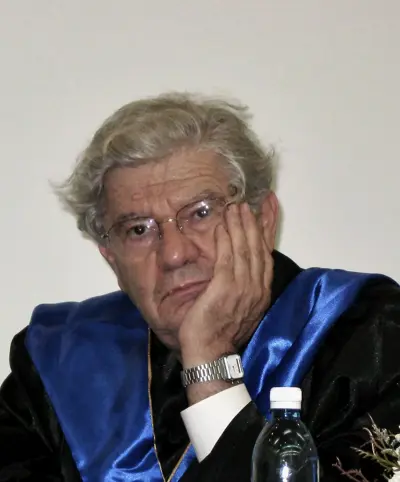
Aharon Barak is an Israeli Professor of Law at the Interdisciplinary Center in Herzliya and a lecturer in law at the Hebrew University of Jerusalem, the Yale Law School, Central European University, Georgetown University Law Center, and the University of Toronto Faculty of Law.
