Mary Wortley Montagu Quotes
This sect of men [the Turkish Ulema] are equally capable of preferments in the Law or the Church, these two sciences being cast into one, a Lawyer and a Priest being the same word …. ‘Tis they that are the real Authors
The letter had been written earlier, but this and 51 other letters written when she was in Turkey were published in 1763. At the time, Turkey, the seat of the Ottoman Empire, was an Islamic state operating under Islamic law, as were all countries within the Ottoman Empire. Today, Turkey is a secular state and the clergy and the legal profession are separate.
Mary Wortley Montagu, 1689-1762, English Author and Wife of the English Ambassador to Turkey, Turkish Embassy Letter, 1763
Sourced by: Eigen's Political and Historical Quotations


This is a very important point as most Muslims believe that the actual wording of the Sharia—Islamic Law—comes from the Prophet directly and are not the words of various legal scholars which is just what they are. Needless to say, there are many differences and even contradictions depending on time and the particular scholar. Islam however has no authority that religiously is higher than any other. In that respect, it is like Judaism. There is not a recognized religious hierarchy as there is in Christian churches.
Theological & Legal Expert. The Sunnah, like the Koran, has statements of the Prophet, Mohammad. A fatwa is a religious legal ruling. This particular Fatwa shows the great difference between the Islamic State and a Republic or Democracy. In the latter forms, any religious practices must be consistent with the Constitution. Even though blasphemy might be prohibited by a religion, the United States Constitution for example protects anyone’s right to be blasphemous. In the Islamic system any constitution or law is subservient to and must be consistent with, the sayings of the Prophet Muhammad. In that sense, unless the Muslim populated nation is secular like Turkey, then the governments are partial or total theocracies.


All modern legal systems conflict in some respects with a literal interpretation of the Koran which is the basis for the traditionalists view of Sharia—Islamic law. Therefore a student of modern law is learning things which go against Sharia as interpreted by fundamentalists. There was a time when Jewish and Christian American religious families were uncomfortable with studding modern law as there were contradictions with Biblical law. There are still a few.


This is one of the early calls for a partition of India which was to be so disastrous after the Second World War. The “free Muslim state of states” turned out to be Pakistan where they have been fighting amongst themselves about how much Sharia would prevail.

Gabriel exaggerates in the sense that while the quotation is correct for many Muslims, it is by no means true of all. Iran for example is an Islamic theocracy, but Turkey is a 99 percent Muslim nation which is totally secular and in some ways is much more restrictive of Islamic teaching and practice than most secular democracies. The fundamentalist Muslim view of the state and religion is essentially the same as the ultra orthodox Jews and Christians. It is true that a greater proportion of Muslims believe in the merging of civil and religious law than Jews and Christians, but by no means all. The non Arab Muslims are much less likely to see the unity of state and religion.

This quotation illustrated the extreme polarization between the current fundamentalist Muslims, and the Muslim modernists and the West. Kamal Ataturk, the great leader and stateman who is the father of modern Turkey, is castigated by the author for leading the new Turkish parliament to depose the Caliph – the civil and religious autocrat, one of whom reigned from after the death of Muhammad till his abolishment in 1924. Most of the rest of the world credits Ataturk with being one of the great leaders of all time—one who led a democratic revolution which transformed Turkey into the only Muslim secular democracy, requiring pubic secular European type education for all children, giving women the right to vote (before the U. S. even), adopting a European alphabet and dress, and outlook on life—creating most remarkably a total cultural revolution with virtually no loss of life. No revolutionary leader, before or since has led so extensive a political and cultural revolution, and it was a bloodless revolution. Turkey, into the 21st century, was by far the most powerful, industrialized, scientific and modern nation of Muslims in the world and others were far behind. Yet many Islamic theologian still castigate Atatork for his great achievements as being against the will of God.


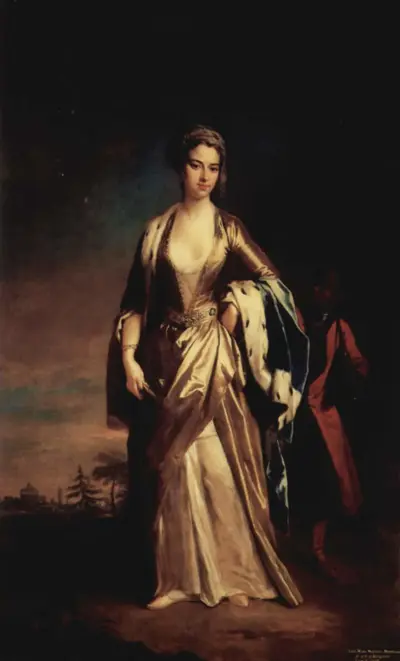
Lady Mary Wortley Montagu was an English aristocrat, writer, and poet. Born in 1689, Lady Mary spent her early life in England. In 1712, Lady Mary married Edward Wortley Montagu, who later served as the British ambassador to the Sublime Porte. Lady Mary joined her husband in the Ottoman excursion, where she was to spend the next two years of her life. During her time there, Lady Mary wrote extensively on her experience as a woman in Ottoman Istanbul. After her return to England, Lady Mary devoted her attention to the upbringing of her family before dying of cancer in 1762.
