Zainah Anwar Quotes
In a democratic society...Islam cannot be the exclusive preserve of the ulama [religious bodies]. How can it be when Islamic laws affect our very way of life? The decision-making process must be participatory and must reflect the diverse and changing nature of Malaysian society. Those practices and legal provisions that give the ulama the sole power to decide on matters of religion and criminalize those with differing opinions must be abrogated. The Constitution must be amended to ensure uniformity of laws and one standard of justice for all. If the ulama continue to remain oblivious to the palpable change that pervades a quickly modernizing, multi-ethnic Malaysia, they run the risk of making themselves increasingly irrelevant to the lives of their people.
Zainah Anwar, Malayasian Feminist Scholar, Member, Sisters In Islam, “Modern, and Moderate, Islam,” AsiaWeek, September 16, 1997
Sourced by: Eigen's Political and Historical Quotations

This quotation illustrated the extreme polarization between the current fundamentalist Muslims, and the Muslim modernists and the West. Kamal Ataturk, the great leader and stateman who is the father of modern Turkey, is castigated by the author for leading the new Turkish parliament to depose the Caliph – the civil and religious autocrat, one of whom reigned from after the death of Muhammad till his abolishment in 1924. Most of the rest of the world credits Ataturk with being one of the great leaders of all time—one who led a democratic revolution which transformed Turkey into the only Muslim secular democracy, requiring pubic secular European type education for all children, giving women the right to vote (before the U. S. even), adopting a European alphabet and dress, and outlook on life—creating most remarkably a total cultural revolution with virtually no loss of life. No revolutionary leader, before or since has led so extensive a political and cultural revolution, and it was a bloodless revolution. Turkey, into the 21st century, was by far the most powerful, industrialized, scientific and modern nation of Muslims in the world and others were far behind. Yet many Islamic theologian still castigate Atatork for his great achievements as being against the will of God.

All modern legal systems conflict in some respects with a literal interpretation of the Koran which is the basis for the traditionalists view of Sharia—Islamic law. Therefore a student of modern law is learning things which go against Sharia as interpreted by fundamentalists. There was a time when Jewish and Christian American religious families were uncomfortable with studding modern law as there were contradictions with Biblical law. There are still a few.

Gabriel exaggerates in the sense that while the quotation is correct for many Muslims, it is by no means true of all. Iran for example is an Islamic theocracy, but Turkey is a 99 percent Muslim nation which is totally secular and in some ways is much more restrictive of Islamic teaching and practice than most secular democracies. The fundamentalist Muslim view of the state and religion is essentially the same as the ultra orthodox Jews and Christians. It is true that a greater proportion of Muslims believe in the merging of civil and religious law than Jews and Christians, but by no means all. The non Arab Muslims are much less likely to see the unity of state and religion.

Fundamentalist Christians and Jews believe that the Bible is the revealed word of God. In Islam, not only is the same position taken, but it is specifically forbidden to even think about or have a personal opinion about a matter which appears in the Koran—decided by Allah and revealed to the Prophet Muhammed.
Abdul Rahman had converted from Islam to Christianity 16 years before. Conversion from Islam is a capital crime under Sharia Law. Rahman was charged but the judge demonstrating the tolerance of Islamic law said that Rahman would be given an opportunity to change his mind and re-embrace Islam and if he did so, he would be converted and not killed.
Muslims are divided about the role of the Islamic religious courts. Some believed that these should be the only courts and should govern all law, religious and civil on the grounds that there are no real differences in Islam. Others believe, as Jammal put forth, that religious courts should only deal with religious and personal matters. Still others believe that these is no place in modern society for religious courts. This debate echoes the debate that took place in Christianity and Judaism, but the vast majority of these have concluded that there is no place for religious courts
A fatwa is a religious legal ruling.
Theological & Legal Expert. The Sunnah, like the Koran, has statements of the Prophet, Mohammad. A fatwa is a religious legal ruling. This particular Fatwa shows the great difference between the Islamic State and a Republic or Democracy. In the latter forms, any religious practices must be consistent with the Constitution. Even though blasphemy might be prohibited by a religion, the United States Constitution for example protects anyone’s right to be blasphemous. In the Islamic system any constitution or law is subservient to and must be consistent with, the sayings of the Prophet Muhammad. In that sense, unless the Muslim populated nation is secular like Turkey, then the governments are partial or total theocracies.
The Governor had introduced Sharia, Islamic Law, into his state. When a woman was sentenced to death by stoning, the Federal Government nullified the sentence on the ground that stoning was not morally right nor was a death penalty for her actions. The woman was not executed

Despite the fact that the statues were holy symbols to Buddhists, they were offensive to Muslims who say statues as “graven images” prohibited by the Koran. See Wakil Ahmad Muttawakil {608419} and Jamal’s other quotation {604665}.


The notion that Islam would be practiced by individuals was in the Ayatollah’s view insufficient. Islam must also control the government—the head.
Hizb ut-Tahrir is a “worldwide Islamic political party.” It is banned as a terrorist, violence provoking institution in most of the Muslim countries and many nations in Europe.


Ironically, without the word “wicked” most people would regard the first sentence as a good description of elements of a modern democracy. It illustrates that for the Islamic fundamentalist democracy substitutes the rule of man for the rule of God, freedom of speech allows heresy and blasphemy to to uttered and communicated, and religion which is supposed to inform and direct politics. So what is good for the lover of democracy is the very thing that is bad for Islam. This is not a uniquely Islamic viewpoint. It has been and is held by fundamentalist Christians and Jews as well who would return to Biblical law punishing blasphemy and heresy with death and have religion drive all politics.


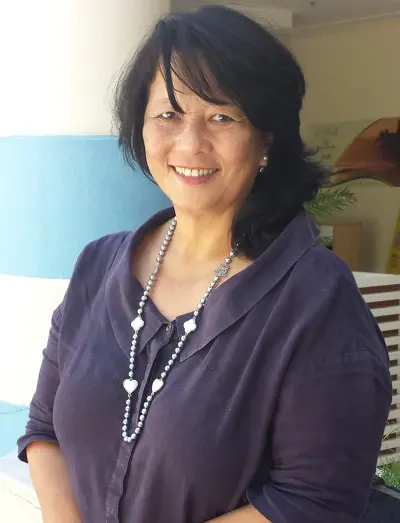
Zainah Anwar is a prominent Malaysian non-governmental organisation leader, activist and Muslim feminist. She was the head of the civil society organisation Sisters in Islam for more than two decades before stepping down. In 2013 she was named by the International Museum of Women as one of its 10 most influential Muslim women.
