Abu Musab al-Zarqawi Quotes
This wicked system is based on freedom of religion and belief and freedom of speech and separation of religion and politics. Democracy is heresy itself.
Ironically, without the word “wicked” most people would regard the first sentence as a good description of elements of a modern democracy. It illustrates that for the Islamic fundamentalist democracy substitutes the rule of man for the rule of God, freedom of speech allows heresy and blasphemy to to uttered and communicated, and religion which is supposed to inform and direct politics. So what is good for the lover of democracy is the very thing that is bad for Islam. This is not a uniquely Islamic viewpoint. It has been and is held by fundamentalist Christians and Jews as well who would return to Biblical law punishing blasphemy and heresy with death and have religion drive all politics.
Abu Musab Zarqawi, 1966-2006, Jordanian Terrorist, Al Qaeda Leader in Iraq, Description of Democracy, Audio Tape, September 2004
Sourced by: Eigen's Political and Historical Quotations

Abdul Rahman, Afghan citizen, had converted from Islam to Christianity 16 years before. Conversion from Islam is a capital crime under Sharia Law which was the law of Afghanistan even after the Taliban had been overthrown. He was jailed and threatened with death. Statements like this and others made directly to the government persuaded the Afghan politicians to go against their mullahs who demanded the death penalty as is proscribed by Islamic Law—Sharia. The judges tried to get Rahman to recant and he would not (see {589518}). So they finally decided that he must be mentally insane and therefore could not be tried, and the problem was solved that way.


Said was commenting on the furor that developed in 1989 when Iran Ayatollah Khomeini issued a Muslim legal opinion—a fatwa--calling for the death of, and offered a bounty on, Salman Rushdie whose book, Satanic Verses, contained material to which they objected as blasphemy:


This is a critical quotation on the government establishment of religion issue. There are a few people who have argued over the years that the Founding Fathers and their culture was religious and where they were careful to avoid favoring one religion over another, they did NOT intend to put atheism on the same equal plane as religion as far as government action is concerned. However, some of the Founding Fathers were atheists, and some others like John Adams were deists—they believed in a God but not in the Trinity or in Judaism or any organized religion. So this quotation makes it clear that the First Amendment does NOT favor religion over non religion or secularism. Atheism must be on an equal footing but not on a higher plane.


This book is endorsed by major religious organizations of all faiths as well as National School Boards Association, National Education Association, National PTA, National Association of Secondary School Principals, National Association of Elementary School Principals, American Association of School Administrators and others. It is used as a guideline by most schools systems in the United States.

This publication was one of the best selling in the entire history of America. Rarely has a single publication been read by as high a proportion of a population. Those who support the maintenance of a strict separation of Church and State in America often point to this quotation and the popularity of Common Sense as evidence that not only were the founding fathers in favor of strict separation but so was the general Colonial American public.


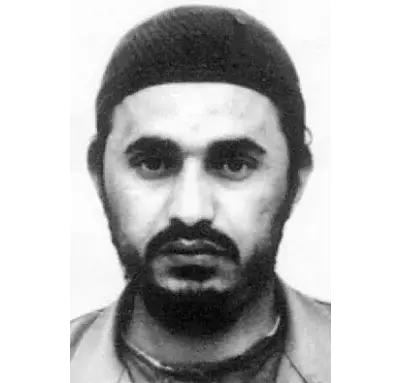
Abu Musab al-Zarqawi, born Ahmad Fadeel al-Nazal al-Khalayleh, was a Jordanian jihadist who ran a terrorist training camp in Afghanistan. He became known after going to Iraq and being responsible for a series of bombings, beheadings, and attacks during the Iraq War, reportedly "turning an insurgency against US troops" in Iraq "into a Shia–Sunni civil war". He was sometimes known by his supporters as the "Sheikh of the slaughterers".
