Whittaker Chambers Quotes
Political freedom is a political reading of the Bible.
Chambers, Whittaker. Witness. Random House, 1952, p. 16.

Ironically, without the word “wicked” most people would regard the first sentence as a good description of elements of a modern democracy. It illustrates that for the Islamic fundamentalist democracy substitutes the rule of man for the rule of God, freedom of speech allows heresy and blasphemy to to uttered and communicated, and religion which is supposed to inform and direct politics. So what is good for the lover of democracy is the very thing that is bad for Islam. This is not a uniquely Islamic viewpoint. It has been and is held by fundamentalist Christians and Jews as well who would return to Biblical law punishing blasphemy and heresy with death and have religion drive all politics.


Note the absolutism of the word unbounded.


The Senate was presented with James Madison’s Language for the First Amendment. These three alternatives were proposed and rejected. The rejected versions turn out to have been very important. Some have argued that the First Amendment does not prohibit Congress making laws regarding religion as long as it doesn’t favor one religion over another—for example pay for clerics of all religions. However, that was the third proposal and it was rejected in favor of the high wall of separation proposed by Madison.


Although the Puritans were the first religious group of immigrants who came to America for religious freedom, once the obtained it, they were terribly despotic in trying to force others to adopt their religious views. By seeking religious freedom the planted the seeds of democracy. By denying it to others, they also planted the seed of the First Amendment. Those who insisted upon separation of church and state always cited the Puritans as example one of what can happen with an established church in America.


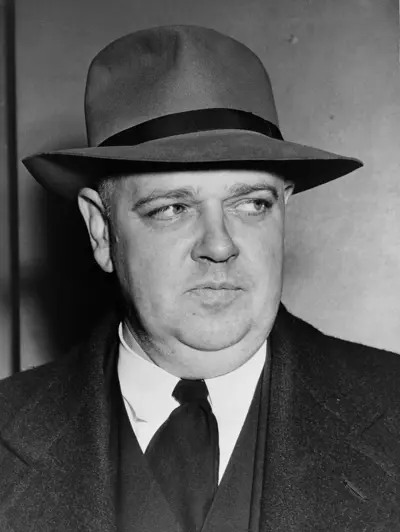
Whittaker Chambers was an American writer-editor, who, after early years as a Communist Party member (1925) and Soviet spy (1932–1938), defected from the Soviet underground (1938), worked for Time magazine (1939–1948), and then testified about the Ware group in what became the Hiss case for perjury (1949–1950), often referred to as the trial of the century, all described in his 1952 memoir Witness. Afterwards, he worked as a senior editor at National Review (1957–1959). US President Ronald Reagan awarded him the Presidential Medal of Freedom posthumously in 1984.
