Edmund Burke Quotes
The first Christians, avoiding the Pagan tribunals, tried most even of their civil causes before the bishop, who, though he had no direct coercive power, yet, wielding the sword of excommunication, had wherewithal to enforce the execution of his judgments. Thus the bishop had a considerable sway in temporal affairs, even before he was owned by the temporal power.
This was before the state had officially sanctioned and accepted the church. Most of the institutions were pagan and the kings had subjects of both religions with Christianity not yet dominant. Yet among Christians, the Church had government temporal power, even before the church was allied with the state.
Edmund Burke, 1729-1797, Irish Orator & Member of the British Parliament, Abridgment of English History
Sourced by: Eigen's Political and Historical Quotations

King Henry VIII had left the Roman Catholic church and taken England and Ireland out also. He replaced the Pope as the head of the English and Irish churches. There was much opposition in Ireland and the priests were the most assertive opponents to the change and were still loyal to the Pope. Queen Elizabeth continued to have problems with the Priests. James I, Elizabeth’s successor, became fed up by the Roman Catholic Priests and therefor issued this Proclamation.


The letter was written at the behest of the Archbishop of Canterbury. The quotation appears to ratify the Pope’s unlimited power, but in actuality carves out an exception whereby the Pope’s authority might be challenged in the future. Specifically, it claims the Pope has not the authority to alter that which “by the word of God, has eternal validity.” Politically, this position put the pope in a box. By arguing against the proposition, the Pope would have to maintain that he should have the right to alter the word of God that had eternal validity which no pope wanted to state. By not challenging the doctrine, there was an opening by which the pope’s omnipotence could be challenged in the future.

This notice of Excommunication was promulgated to the Catholic clergy in Ireland in May of 1538. It required all Roman Catholic leaders to size the property of Protestants or Catholics who sympathized with them. Those who did were then regarded as traitors by the Protestant King. The anti-Protestant feeling culminated with the massacre of about 100 Protestants who were drowned in Bann a few years later.

William the Conqueror. This is one of the earliest government action separating some church functions from state functions.


The Supreme Court limited authority of religious courts to matters where both parties belonged to the religion. Jewish courts had tried to assert the power to annul mixed marriages where only one party was Jewish on the grounds that orthodox Jews oppose mixed marriage. Conflict between religious & civil courts has existed ever since there have been civil courts. Historically there was no separation & the Religious Courts in ancient Israel, early Christendom & Islam had universal jurisdiction. As Europe’s civil authorities wrested authority from religious courts, modernity has diminished or eliminated the legal jurisdiction of religious courts. Even in the United States there are courts operated by some religions; if members wish to voluntarily submit their disputes, they can. In most Islamic countries & Israel there are religious courts which have some authority over family & purely religious matters & in Muslim theocracies the religious courts are the only courts as in ancient times.

As enlightened as this statement is, it was not always a part of Mormon doctrine. When Brigham Young was head of the church he also served as Governor of the Utah Territory, and the separation of church and state was not so clear. In modern times however, the Mormon views have been the quintessential views of most Americans—Mormon or otherwise.

Then, as now, there were some who claimed there should be a larger role for Christianity in American law and governance. One such view in the first half of the 19th century was that whatever was unspecified in the Constitution deferred to the common law. England had an official state Christian church and therefore Christianity must have been a part of English common law and hence should be a significant part of American law and governance. Jefferson was one of the many leaders who refuted the notion by pointing out that the common law in England predated Christianity.
Carroll was writing to Troy during the time of the question of Catholic emancipation in England. Here he is clearly alluding to the British form of government. Carroll never missed the opportunity to champion religious freedom as manifested in the U.S. Constitution. For an earlier example of his praise for religious freedom, see {596933}.

i.e., a clergyman representing a congregation The theory of this particular expulsion applied not to clergy in general, but to clergy who represented a Congregation. In the absence of strict separation of church and state, clergy representing congregations had representative and legal roles in other aspects of the government and therefore represented a problem of separation of powers within the government. The same logic, for example prohibited Sheriffs and Tax Officials from the House of Commons as well as Judges sitting in the Lords. With strict separation of church and state however, the separation of powers argument does not hold, and hence there is no such current prohibition. However, at the end of the 20th century, the Roman Catholic and some other religious institutions had reached the conclusion that clerics serving as elected representatives to various civil legislative bodies potentially had an inherent conflict of interest and divided loyalty and banned the practice from the religious end although the civil laws did not preclude it.


This quotation illustrates how the power and mechanism of an established church operated to control ideas and maintain theological monopoly. In this case, no one could sell or rent any facility in the city to a cleric or church of any kind or persuasion without first having the approval of the Bishop who had theological control of that territory. Even Catholic scholars could not rent a room in the city unless their scholarship met with the Bishop’s approval. This was history with which the American Founding were very familiar, and wanted to avoid by adopting the 1st Amendment.

The clergy of the colonies were split on the American Revolution, but those clergy who supported the revolution made a huge contribution to the individual American’s intellectual view of the legitimacy of Parliament’s making laws governing the American Colonies. The anti-British clerics called for action while other forces of colonial America urged caution.


The Holy Roman Emperor and the Pope were at odds. The Pope had issued an edict staking out the powers of the Pope. King Henry called a conclave of clerics and deposed Pope Leo VII. The Pope Excommunicated Henry and deposed him as king and emperor. Civil war ensued, and finally they reached a compromise and accommodation with each other." Saint Hildebrand
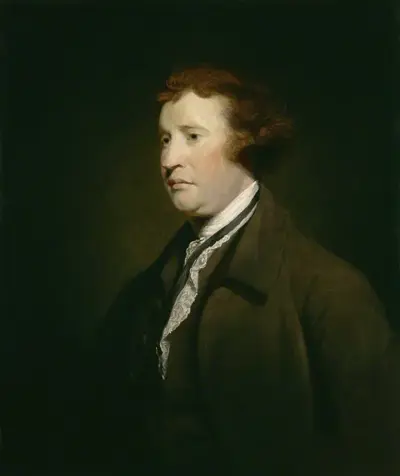
Edmund Burke was an Irish statesman, economist, and philosopher. Born in Dublin, Burke served as a member of parliament (MP) between 1766 and 1794 in the House of Commons of Great Britain with the Whig Party after moving to London in 1750.
