Charles Hodge Quotes
All Church power arises from the indwelling of the Spirit; therefore those in whom the Spirit dwells are the seat of Church power. But the Spirit dwells in the whole Church, and therefore the whole Church is the seat of Church power.
Hodge, Charles. What is Presbyterianism? Presbyterian Board of Publication, 1855, p. 26.

This notice of Excommunication was promulgated to the Catholic clergy in Ireland in May of 1538. It required all Roman Catholic leaders to size the property of Protestants or Catholics who sympathized with them. Those who did were then regarded as traitors by the Protestant King. The anti-Protestant feeling culminated with the massacre of about 100 Protestants who were drowned in Bann a few years later.

This concept is not terribly different from the concept of the theocracy of the Islamic government of Iran in the 21st century. There is a civil government but it serves and is “under the direction of the spiritual power.”


The letter was written at the behest of the Archbishop of Canterbury. The quotation appears to ratify the Pope’s unlimited power, but in actuality carves out an exception whereby the Pope’s authority might be challenged in the future. Specifically, it claims the Pope has not the authority to alter that which “by the word of God, has eternal validity.” Politically, this position put the pope in a box. By arguing against the proposition, the Pope would have to maintain that he should have the right to alter the word of God that had eternal validity which no pope wanted to state. By not challenging the doctrine, there was an opening by which the pope’s omnipotence could be challenged in the future.

There was a continuing power struggle between the more powerful kings of Europe and the Roman Catholic Pope. This struggle however was not one of church and state. Neither the kings nor the clergy viewed the two as separate domains. Instead they saw the two in much the same way as the ancient Jews and many contemporary Muslims view relationship—as an inseparable amalgam. However there was much debate over who could best protect and manage the amalgamated entity. In this case Alcuin was arguing that Charlemagne could ensure the well-being of the church better than the Pope. The power struggle went on for centuries between more or less able, powerful, and corrupt kings and popes.


This was before the state had officially sanctioned and accepted the church. Most of the institutions were pagan and the kings had subjects of both religions with Christianity not yet dominant. Yet among Christians, the Church had government temporal power, even before the church was allied with the state.


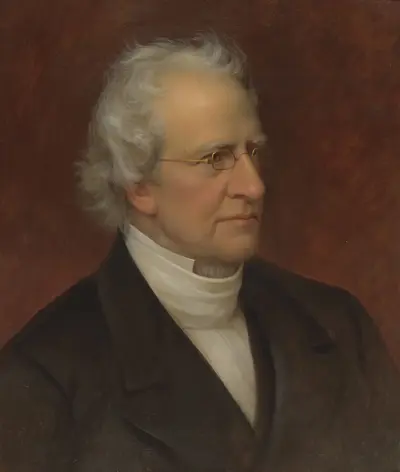
Charles Hodge was a Presbyterian theologian and principal of Princeton Theological Seminary between 1851 and 1878.
