GIROLAMO SAVONAROLA
In addition to the immense secular powers that can be used to obtain obedience, in a theocracy, there is the additional weapon of damnation. See {628182} for his use of some of the others.
Savonarola was cruel dictator who opposed to any kind of a Parliament or assembly or any other kind of civil freedom. However, he saw freedom of the spirit in his view of God, Christ and love of others. He burned hundreds of “heretics” at the stake which was an example of a very perverse sort of love.
government appointed officials and bureaucrats Savonarola was a very hated ruler, opposed to any kind of a Parliament or assembly. And the penalty for advocating for a Parliament was severe. The Signoria were the various government appointees and clerks. They were influential in Florence and hence they were silenced by the mot draconian methods. There was a movement throughout Italy for parliaments and less arbitrary government. Savonarola was particularly strict in his rooting out sin and cruel in his punishments and hence very unpopular. He was also under the delusion that God himself had called on him to preach his strict version of morality. Some of the Nobles reached the Pope with many of Savonarola’s extreme statements and Savonarola was excommunicated and burned as a heretic. His executioner gloated that he was burning Savonarola before the powerful priest could burn him as he had done so many others.
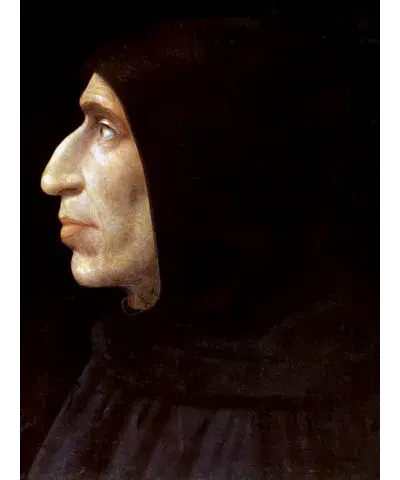
Girolamo Savonarola was an Italian Dominican friar from Ferrara and preacher active in Renaissance Florence. He was known for his prophecies of civic glory, the destruction of secular art and culture, and his calls for Christian renewal. He denounced clerical corruption, despotic rule, and the exploitation of the poor. He prophesied the coming of a biblical flood and a new Cyrus from the north who would reform the Church.
