John Hughes Quotes
In the present disturbed state of the city I will appeal not only to them, but to all persons who love God and revere the holy Catholic religion which they profess, to respect also the laws of man and the peace of society, to retire to their homes with as little delay as possible, and disconnect themselves from the seemingly deliberate attempt to disturb the peace and social rights of the citizens of New York. If they are Catholics, or of such of them as are Catholics, I ask, for God's sake, for the sake of their holy religion, for my sake, if they have any respect for the episcopal authority, to dissolve their association with reckless men who have little regard for Divine or human law
First Irish Bishop in the United States and the First Catholic Cardinal of New York. Major anti-draft riots had broken out in New York City. Many of these were led by poor Catholics who resented the fact that they had to fight and perhaps die while the rich could be exempted by paying $300. Many Negroes and others were murdered, homes of the wealthy were sacked, and the militia had to be called out to restore order.
John Hughes, 1797-1864, Catholic Archbishop of New York Appeal to Catholics, July I6, 1863
Sourced by: Eigen's Political and Historical Quotations


Several years before the Battle of Bunker Hill, revolutionary activity had already broken out in the American colonies—See {634132} for an example. This law gave the British authorities much more “clout” in dealing with the “seditious” American activities. It protected English law enforcement officials from being tried in local Colonial courts for murder or assault in putting down insurrections. George Washington and other Patriots were outraged over this law. See {634131}.

Pen name: Jack Nipps


Trump was then President Elect who already had a large staff helping him fomake the transition. He still went off on his own with this state,ment whiich runs afoul of the Constitution which he would soon sware to defend when he took the Oath of Office. The Supreme Court had unequivocably ruled that the burning of the flag was a type of political speech and as such could not be curtailed or punished by the government. The penalty of a loss of citizenship was another constitutional thicket. In addition. in the hisoty of the country,, it had never been used as a punishment for breaking domestic law.


Earlier, a virtually all white police force in nearby 67% Black Ferguson, had shot an unarmed black young man who was 20 feet away with his hands up, 7 times killing him and then leaving the body uncovered on the street for over 4 hours. Many people of all races began to peacefully demonstrate in Ferguson and were met with military assault weapons pointed at them and military armored vehicles, with the police illegally (as later determined by the courts) were interfering with the right to protest. The demonstrations turned to riots and there was looting and arson of business establishments. The demonstrations started to spread to nearby St. Louis and other cities as the news spread. While the Ferguson officials had behaved so badly and stupidly, the St. Louis mayor exhibited democratic leadership that was an example for others. Slay was then a 4 term mayor, being reelected more than any other mayor in St. Louis history, and was one of the outstanding politicians in America.

In Ireland at the time the established church—the Protestant Anglican Church of Ireland—had the legal right to collect annual Tithes from the population in order to fund the activities of the Church. One difficulty however, was that the majority of the population were Roman Catholics. The poorest of them could not afford the tithe payments to any church. The Irish Protestant clergy lived in a particularly sumptuous style and were much more interested in politics and maintaining the Protestant ascendency than they were in ministering to the poor and had no interest in aiding the Catholic poor.
In Ireland at the time the established church—the Protestant Anglican Church of Ireland—had the legal right to collect annual Tithes from the population in order to fund the activities of the Church. One difficulty however, was that the majority of the population were Roman Catholics. The poorest of them could not afford the tithe payments to any church. Whereas in the past, the Protestant Church officials did not force the issue of tithe collection from the poor, in about 1830 they changed and seized the property of the poor (Protestants and Catholics) and auctioned it off to pay for the tithe. The Cardinal organized this campaign of using the technicalities of the laws to combat the Tithe. For example, the poor Catholic farmers gave title to their cattle to the Catholic Church and the Archbishop then had them feed and care for “his” cattle in exchange for their ability to use the milk for drinking and cheese.
There were other Roman Catholics who used violence including physically attacking the Tithe Collectors. In Ireland at the time the established church—the Protestant Anglican Church of Ireland—had the legal right to collect annual Tithes from the population in order to fund the activities of the Church. One difficulty however, was that the majority of the population were Roman Catholics. The poorest of them could not afford the tithe payments to any church. Whereas in the past, the Protestant Church officials did not force the issue of tithe collection from the poor, in about 1830 they changed and seized the property of the poor (Protestants and Catholics) and auctioned it off to pay for the tithe. The Cardinal organized a campaign of non-violent civil disobedience to combat the Tithe.

The origins of the extreme religious intolerance of Spain occurred centuries before the excesses of the Spanish Inquisition. Before the Conference the Visigoths and their king had been converted to Christianity but not all cared for the new religion.


Samuel Langhorne Clemens, 1835-1910


This was often referred to as “The Golden Bull.” The Church clerics formed the judiciary for civil as well as religious matters. In time Catholic Europe would separate the judicial authority between religious and civil courts, the final step was to bring clerics and the church under the civil control and authority which was fought vehemently by the church which for years tried to retain at least the right to try priests and other church officials even for civil crimes.
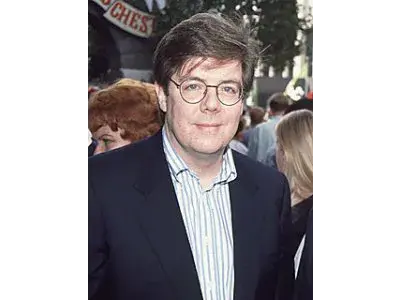
John Wilden Hughes Jr. was an American filmmaker. Beginning as an author of humorous essays and stories for National Lampoon, he went on to write, produce and sometimes direct some of the most successful live-action comedy films of the 1980s and 1990s such as National Lampoon's Vacation (1983) and its sequels National Lampoon's European Vacation (1985) and National Lampoon's Christmas Vacation (1989), Mr. Mom (1983), Sixteen Candles (1984), Weird Science (1985), The Breakfast Club (1985), Ferris Bueller's Day Off (1986), Pretty in Pink (1986), Some Kind of Wonderful (1987), Planes, Trains and Automobiles (1987), She's Having a Baby (1988), Uncle Buck (1989), Dutch (1991), Dennis the Menace (1993), Baby's Day Out (1994), the Beethoven franchise (co-written under a pseudonym with Amy Holden-Jones) and Home Alone (1990) and its sequels Home Alone 2: Lost in New York (1992) and Home Alone 3 (1997).
