ENGLISH PARLIAMENT
(Parliament of England)
It was not until 1780 that Catholics were allowed to even be members of Town Corporations.
This appears to be the earliest use of the phrase which was “borrowed” by the founding fathers in the writing of the U. S. Constitution.
He had not committed any felonies, but these charges were laid under the concept of “high crimes and misdemeanors”.
In effect, the English Parliament replaced the Pope as head of the Catholic church in Ireland with King Henry the VIII. He had already become the head of the Church in England when the Pope refused to grant him the right of divorce so that he could marry Anne Boleyn, The Irish clergy and many Irishman were aghast. They were instructed to erase the Pope from their literature {639436}. They were even more distressed when the English Royal Commission recommended the closing of all Irish monasteries. See {639434}.
Several years before the Battle of Bunker Hill, revolutionary activity had already broken out in the American colonies—See {634132} for an example. This law gave the British authorities much more “clout” in dealing with the “seditious” American activities. It protected English law enforcement officials from being tried in local Colonial courts for murder or assault in putting down insurrections. George Washington and other Patriots were outraged over this law. See {634131}.
Oliver Cromwell’s Puritan Parliament was opposed to the celebration of Christmas on religious grounds. See {629849} for more on the Puritans and Christmas. Generally, it was the Catholics who celebrated Christmas and typically they had a Christmas Mass. The anti-Catholic bias was so great that the Pope was often accused of being the Anti-Christ - a terrible insult.
All members of Parliament were required to sign and publicly declare this oath. Two days later the Parliament ordered the oath—then called a “protestation”—printed and distributed throughout the realm. All minor officials and clerics were also required to make their “protestation.” It was excesses like this that created a negative attitude in England regarding loyalty oaths and the American Founding Fathers specifically knew of this—then relatively recent—example when they wrote the Constitution and the Bill of Rights. We have left the then English spelling as is.
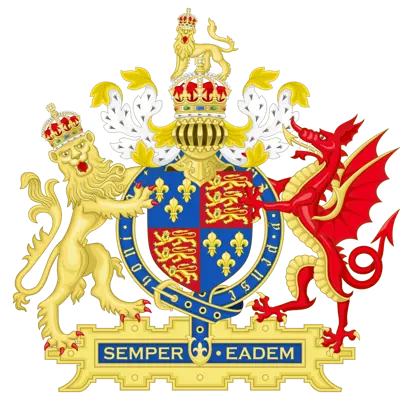
The Parliament of England was the legislature of the Kingdom of England, existing from the early 14th century until 1707, when it united with the Parliament of Scotland to become the Parliament of Great Britain after the political union of England and Scotland created the Kingdom of Great Britain.
