English Parliament Quotes
I,-------- do, in the presence of Almighty God, promise, vow, and protest to maintain, and defend as farr as lawfully I maye, with my Life, Power and Estate, the true Reformed Protestant religion, expressed in the Doctrine of the Church of England, against all Popery and Popish Innovations, within this Realme, contrary to the same Doctrine, and according to the duty of my Allegiance, His Majesties Royal Person, Honour and Estate, as alsoe the Power and Privileges of Parliament, the lawful Rights and Liberties of the Subjects, and any person that maketh this Protestation, in whatsoever he shall do in the lawful Pursuance of the same; and to my power, and as farr as lawfully I may, I will appose and by all good Ways and Means endeavour to bring to condign Punishment all such as shall, either by Force, Practice, Councels, Plots, Conspiracies, or otherwise, doe any Thing to the contrary of any Thing in this present Protestation contained: and further, that I shall, in all just and honourable ways, endeavour to preserve the Union and Peace betwixt the Three Kingdoms of England, Scotland and Ireland: and neither for Hope, Feare, nor other Respect, shell relinquish this Promise, Vow and Protestate.
All members of Parliament were required to sign and publicly declare this oath. Two days later the Parliament ordered the oath—then called a “protestation”—printed and distributed throughout the realm. All minor officials and clerics were also required to make their “protestation.” It was excesses like this that created a negative attitude in England regarding loyalty oaths and the American Founding Fathers specifically knew of this—then relatively recent—example when they wrote the Constitution and the Bill of Rights. We have left the then English spelling as is.
English Parliament, Loyalty Oath, May 3, 1641
Sourced by: Eigen's Political and Historical Quotations

At the time, The Oath of Supremacy, was required to take a seat in the British Parliament. It was specifically written to keep Roman Catholics out of Parliament. O’Connell and his colleagues adopted a political tactic whereby Catholics would run for Parliament, and then if an when they won, refuse to take the oath and hence be unable to take their seat. And that is just what happened. The Duke of Wellington, the Prime Minister, was trying to have Ireland join in union with Great Britain, and he didn’t want Irish Catholic anger and resentment because Irish seats in Parliament were empty by virtue of blatant religious discrimination. King George IV however was a virulent anti-Catholic, but Wellington finally persuaded him to relent and O’Connell and other Irish Catholics finally entered Parliament.

Thomas of London. Tennyson’s quotations was not literal but the synthesis of the conflict. Beckett was the friend of King Henry and his Chancellor. Henry against Becket’s advice appointed him Archbishop of Canterbury, the head of the church in England. Soon Henry came into conflict with the Church and Thomas sided with the Church and against his old friend and king. The king had him assassinated despite their friendship.

There was a legal requirement that all cadidates for the parliament had to sign before the election an oath swearing to take their seat if elected to close off the possibility that some would cripple the parliament by winning but not taking their seats. De Valera wanted to run, and fully intended to take his seat, but had promised to sign no oaths about the parliament elections. On the last day possible, he went to the election clerk who gave him a piece of paper with the oath printed on the top and below it, the lines for candidate signatures. De Valera took a blank piece of paper and covered the oath but leaving the signature line exposed. He then signed the line and made sure that the clerk would remember that he has not signed an oath, but had signed a blank piece of paper where the oath could not be seen. To him this was a very important distinction but if failed to convince most other Irishmen.

1st Earl of Beaconsfield


The main purpose of the oath was to eliminate Roman Catholics who recognized the Pope as the Supreme Ecclesiastical authority. The subtlety evaporated by 1640 when the official oath actually named Rome as the target. See {617547}.

This oath was required of Southern Rebels who wanted obtain amnesty from treason which they had committed by engaging in the Civil War. See {623307} for the Presidential Proclamation.

This is an excellent example of the many public insults that the Irish religious leaders hurled at each other exacerbating the intercommunal tension between the Catholics and Protestants. There were amost no Irish leaders of either religion who tried to dampen the animosity and conflict.

Orangemen were the ulta Protestant Nationalists of Northern Ireland. Both Protetants and Catholics had their extremists who publicly spewed their hate, desire for exclusivity, and insults with little moderation from moderates who always risked retaliation from the extremists even of their own religion, not unlike the situation of the beginning of the 21st century, where Muslim moderates were cowed and intimidated by the religious Islamic extremists.

The members of the Ribbon Society were referred to as Ribbonists and they saw themselves as a counterweight to the Orange Order of the extremist Protestants. The Protestants were the “Hereticks”—this was the spelling of the time.

The Irish Earls of Ulster, after a failed rebellion against English rule, fled to the European continent. As Chichester realized, this created an opportunity for the King to name new Earls and grant them the lands and possessions of the Earls who had fled. And since the Irish people were loyal to their traditional Earls. He suggested that English and Scots colonists be recruited to settle the lands. The King agreed and referred to the project as the “Ulster Plantation”. This was the reason that Northern Ireland had a much larger Protestant population percentage than the rest of Ireland and wanted to remain part of England when Ireland obtained its independence.
The Irish monks were loyal to the pope and were outraged when he was displaced by King Henry VIII. They were seen as a hotbed of disloyalty and therefore ordered to close. This is one of the many examples where an established government church dictated not only how people should worship but also prohibit other religions from functioning. These examples were well known to the American Founding Fathers and much of educated American opinion which was one of the drivers of the First Amendment and the separation of church and state.

A delegation from Sinn Fein, headed by Arthur Griffith and Michael Collins, had negotiated a treaty of Irish Independence except that it did not cover Northern Ireland where the majority of the people wanted to stay a part of Britain. For 700 years, the Irish had fought for independence, and finally they got it for the vast majority of Ireland and the overwhelming majority of the Catholics of Ireland. The alternative to agreeing to the treaty was to continue the war between the IRA and the British Troops. At the time, the IRA was just about totally beaten and probably could not hold out another month. De Valera, a very shrewd politician, as the leader of Sinn Fein (and the IRA) would normally have headed the Irish Delegation. But he chose not to because he realized that they would never get independence for all 32 counties of Ireland as the British would not leave the Northern Ireland Protestants to their fates against their will. The best Ireland could get was Independence for all of Catholic majority Ireland. And he knew that public opinion would oppose giving up even one county becuse that was what the leaders had told the people for years. So De Valera let his two associates take the popular blame after he denounced the treaty with his famous quotation {639690}. Shortly after that, Michael Collins, the brilliant military Commander of the IRA who signed the treaty was assassinated. To many, it was as if De Valera had pulled the trigger. The treaty was ratified by a 7 vote margin by the Dail as there was no army left to fight, and the angry Irish electorate voted for De Valera as Ireland’s first President. The politician had won; the patriot had died.
The Emperor had made his brother King of Holland, thinking of it as an unimportant backwater of the French Empire. But Louis took his oath and job very seriously, and although he did not have the great talent of his brother, he made a serious effort to be a good king.


Barrow tried to argue that attacking the Bishops was not an attack on the Queen (Elizabeth I) who was head of the church. His argument failed and he was hanged. Even in modern times there are some who see an attack on a cabinet member as an attack on the President or Prime Minister, since the former serve at the suffrage of the latter.

The Chief Secretary, Lord Castleregh, had put forward a resolution to bring about the unification of Great Britain and Ireland under the single British Parliament at Westminster. He and his allies had bribed a number of the Irish MPs to support the union. With Union some Irish MPs would then be able to win seats representing Ireland in the British Parliament. Although Grattan and most of the Orangemen opposed the Union, 4 months later, the bill passed comfortably. Ironically, Grattan was one of the Irish MPs whose popularity won a seat in the unified British Parliament.

The revolutionary acts from some of the more radical colonists but the colonial power structure was trying to negotiate for changes from the taxation and rights-impinging laws that Parliament had passed. Within a year the Continental Congress would take a more revolutionary position when this petition yielded no betterment-- {636864} and {636958}.
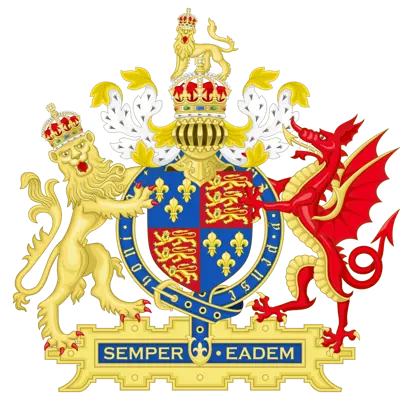
The Parliament of England was the legislature of the Kingdom of England, existing from the early 14th century until 1707, when it united with the Parliament of Scotland to become the Parliament of Great Britain after the political union of England and Scotland created the Kingdom of Great Britain.
