Henry Grattan Quotes
The thing which he proposes to buy is what cannot be sold—liberty. He proposes to you to substitute the British Parliament in your place …. Against such a body, were I expiring on the floor, I should beg to utter my last breath and record my dying testimony.
The Chief Secretary, Lord Castleregh, had put forward a resolution to bring about the unification of Great Britain and Ireland under the single British Parliament at Westminster. He and his allies had bribed a number of the Irish MPs to support the union. With Union some Irish MPs would then be able to win seats representing Ireland in the British Parliament. Although Grattan and most of the Orangemen opposed the Union, 4 months later, the bill passed comfortably. Ironically, Grattan was one of the Irish MPs whose popularity won a seat in the unified British Parliament.
Henry Grattan, 1746-1820, Irish Member of British and Irish Parliaments, Irish House of Commons debate, January 15, 1800
Sourced by: Eigen's Political and Historical Quotations


In most revolutionary settings leaders have to persuade people who have voted with no success to turn to the rifle. In Ireland at this point, almost all the nationalsits knew that the rifle would help them but they were not sure that a vote would have the effect of a bullet.

He attempted to broker an agreement between India’s Muslims and Hindus as to the form of the successor government.


British colonial economics imported raw materials to England which then exported them back to the colonies as manufactured goods. Gandhi correctly calculated that by minimizing purchase of English cloth, colonial control of India would not be as profitable. Gandhi not only called for the boycott, but called on Indians to spin their own cloth, set an example be spinning himself, and his Congress party adopted the spinning wheel as its logo and symbol which continues today. Narcotics, was at the time not only legal, but British economic interests controlled much of the world narcotics trade. Gandhi’s call for a boycott of narcotics was as much an economic tactic as it was a health measure.

The Ottoman Turks, at war with Russia, exterminated a large proportion of the Armenian population of the then Turkish Empire. Some of the ethnic Armenians were working with Armenians in greater Russia and thus were a risk to the Turks. However, they starved, shot, beat, hung, and bayoneted hundreds of thousands of ethnic Armenians, wiping out entire villages and towns. Despite the fact that women and little children were all killed, Modern Turkey even into the 21st century refused to admit that this was a genocide even though there was ample documentation to prove it was not spontaneous but government ordered by the “Young Turks” then controlling Turkey. See {620603} and {612638} for examples. The modern Turks maintain the view expressed during the genocide that Armenians were a threat to Turkish Independence.


The organization sent 2,100 volunteers to fight for South American independence from Spain.

He was addressing the Conservatives of Ulster, the Northern Ireland province that was the center of the Orangemen movement of Irish Protestants who were fighting to retain 'Protestant Ascendency' -- which was the social, political and cultural domination of the Protestants (the minority) over the Catholics (the majority). This was best achieved by keeping Ireland a part of Great Britain as opposed to having Ireland as a separate, independent country.


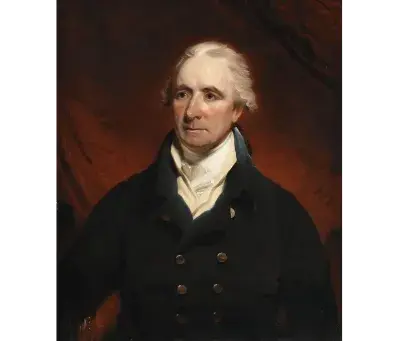
Henry Grattan was an Irish politician and lawyer who campaigned for legislative freedom for the Irish Parliament in the late 18th century from Britain. He was a Member of the Irish Parliament (MP) from 1775 to 1801 and a Member of Parliament (MP) from 1805 to 1820. He has been described as a superb orator and a romantic. With generous enthusiasm he demanded that Ireland should be granted its rightful status, that of an independent nation, though he always insisted that Ireland would remain linked to Great Britain by a common crown and by sharing a common political tradition.
