Jefferson Davis Quotes
The war must go on to last man of this generation falls in his tracks … unless you acknowledge our right to self government. We are not fighting for slavery. We are fighting for independence, and that, or extermination, we will have
Jefferson Davis, 1808-1889, U. S. Congressman & U. S. Senator (Democrat, MS), U. S. Secretary of War, President, Confederate States of America, Statement to unofficial peace negotiaters James R. Gilmore and James F. Jaquess, 1864
Sourced by: Eigen's Political and Historical Quotations


Leading the Senate opposition to the League of Nations proposed by Woodrow Wilson:

He had been King of Portugal and then had come to the Portuguese colony of Brazil where he led a revolution against Portugal, declared independence from the “mother country, and was elected as Emperor of Brazil. The Colony was much larger and richer in natural resources than the “mother country.”


In 1937 the U. S. Treasury Department commissioned a pair of large murals to decorate the lobby or the Ariel Rios Federal Building in Washington DC. On the mural was depicted a U. S. Mail Service from Alaska to Puerto Rico. It showed four Puerto Rican women reading a letter in the Inuit dialect presumably delivered from Alaska. The authorities loved the mural until they discovered the translation of the Inuit letter. This was a direct reference to the Puerto Rican Nationalist Independence Movement. That year 18 Puerto Rican Nationalists were killed and over 100 wounded when police fired into a crowd of demonstrators on March 21. Kent, a famous artist, planted a newspaper story with the translation and soon media all over the company were drawing attention to the Puerto Rican movement, just as Kent had intended.
This newspaper was an English language organ published by General Allenby’s British and Allied forces in the Middle East. Prior to the war, the Middle East was all part of the Ottoman Empire. However, the Ottoman Turks sided with Germany in WWI and their Middle East dominions were targets for the allied military strategy.

The critic observed that the South would not give up their slaves voluntarily and that and that vigorous abolition pressure on the South would lead to war and asked Angelina if she would want a civil war. Grimke’s response was predictive of what happened—the most terrible was in U. S. History to end the most terrible cruelty and persecution in American history. Note that she herself was willing to die to end slavery. See {629094}.


In most revolutionary settings leaders have to persuade people who have voted with no success to turn to the rifle. In Ireland at this point, almost all the nationalsits knew that the rifle would help them but they were not sure that a vote would have the effect of a bullet.


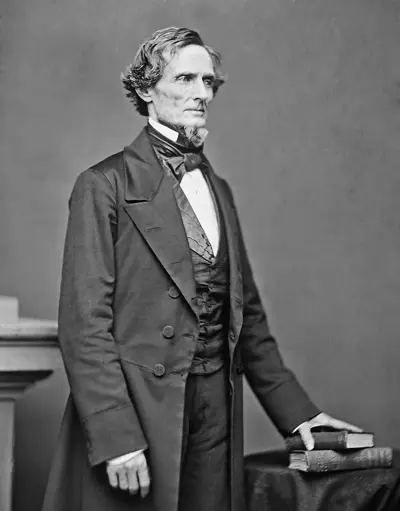
Jefferson Finis Davis was an American politician who served as the president of the Confederate States from 1861 to 1865. As a member of the Democratic Party, he represented Mississippi in the United States Senate and the House of Representatives before the American Civil War. He previously served as the United States Secretary of War from 1853 to 1857 under President Franklin Pierce.
