Angelina Grimke Quotes
O’ Yes. War is better than slavery.
The critic observed that the South would not give up their slaves voluntarily and that and that vigorous abolition pressure on the South would lead to war and asked Angelina if she would want a civil war. Grimke’s response was predictive of what happened—the most terrible was in U. S. History to end the most terrible cruelty and persecution in American history. Note that she herself was willing to die to end slavery. See {629094}.
Angelina Grimke, 1805-1879, Abolitionist & Suffragette, Response when faced by a critic of her radical anti-slavery advocacy, Quoted in New York Times, August 28, 2011
Sourced by: Eigen's Political and Historical Quotations

Grimke was the daughter of a prestigious, wealthy, slave owning, Southern Family from Charleston, and this letter was the first from anyone of the establishment of the South which favored abolition. It shook the Southern establishment to the core.


His prediction would come true 72 years later. He was a slave trader and a strong supporter of the institution. See {624060}. However unlike most slave supporting Southerners, he came from one of the richest families of New England. His own brother Moses Brown was an ardent abolitionist and John was able to see the arguments and forces lined up against slavery. He saw that abolitionists as the trouble makers because they were trying to change the status quo. Having much experience with Southerners and selling them many slaves, he realized early how the South was totally dependent on slavery for its economic and social way of life. Few Americans had that broad a perspective.

The bill was defeated in the Confederate Senate {590064} so was the last good opportunity for the Confederacy. Lee was totally correct about what the Union would do, and the Northern use of Negro troops from the South was the final nail in the Confederate coffin.

See Thomas Jefferson: {605051} for a somewhat similar notion.


The country had been completely polarized by 1854. It was only a matter of time for something like the Civil War to break out. The impossibility of compromise was not just held by radicals like Garrison but after the Compromise of 1850 fell apart, most politicians on both sides s


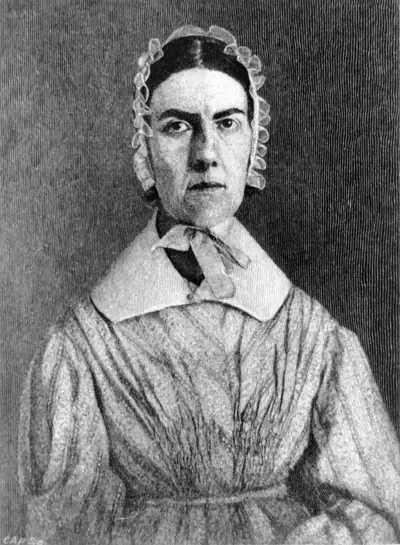
- Born: February 20, 1805
- Died: October 26, 1879
- Nationality: American
- Profession: Politician, Abolitionist, Suffragist
Angelina Emily Grimké Weld was an American abolitionist, political activist, women's rights advocate, and supporter of the women's suffrage movement. She and her sister Sarah Moore Grimké are the only white Southern women who became abolitionists. The sisters lived together as adults, while Angelina was the wife of abolitionist leader Theodore Dwight Weld.
