Seamus Heaney Quotes
In a war situation or where violence and injustice are prevalent, poetry is called upon to be something more than a thing of beauty.
Heaney, Seamus. The Redress of Poetry. Farrar, Straus and Giroux, 1995.


Alluding to Ecclesiastes 3:1 ff, "For everything there is a season, and a time for every matter under heaven: a time to be born, and a time to die;.." The exact wording of his sermon has been lost, but the sentiment was reported by many.


The critic observed that the South would not give up their slaves voluntarily and that and that vigorous abolition pressure on the South would lead to war and asked Angelina if she would want a civil war. Grimke’s response was predictive of what happened—the most terrible was in U. S. History to end the most terrible cruelty and persecution in American history. Note that she herself was willing to die to end slavery. See {629094}.


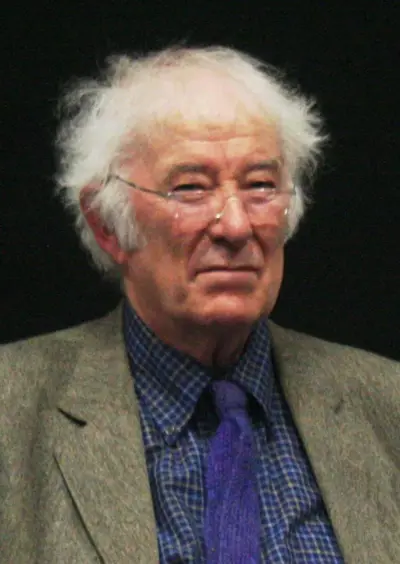
Seamus Justin Heaney MRIA was an Irish poet, playwright and translator. He received the 1995 Nobel Prize in Literature. Among his best-known works is Death of a Naturalist (1966), his first major published volume. Heaney was and is still recognised as one of the principal contributors to poetry in Ireland during his lifetime. American poet Robert Lowell described him as "the most important Irish poet since Yeats", and many others, including the academic John Sutherland, have said that he was "the greatest poet of our age". Robert Pinsky has stated that "with his wonderful gift of eye and ear Heaney has the gift of the story-teller." Upon his death in 2013, The Independent described him as "probably the best-known poet in the world".
