William E. Borah Quotes
Peace upon any other basis than national independence, peace purchased at the cost of any part of our national integrity, is fit only for slaves, and even when purchased at such a price it is a delusion, for it cannot last.
Leading the Senate opposition to the League of Nations proposed by Woodrow Wilson:
William E. Borah, 1865-1940, U. S. Senator (Republican, ID), Speech, U. S. Senate, November 19, 1919
Sourced by: Eigen's Political and Historical Quotations


Madison was defending the proposed Constitution against a vocal minority who complained that the Federal government would be dominant over the States and the large cities. Madison pointed out that it was people who fought the Revolution and sacrificed for it, not States or political entities. The Constitution was to be for the people, not the existing governmental entities. It was for Americans and not for local politicians. The “State’s Rights faction lost the debate, and the Constitution and Bill of Rights was adopted. That is why this quotation is so important. The slavery enthusiasts, racists, and others have constantly tried to diminish the Federal supremacy even to this day.

This newspaper was an English language organ published by General Allenby’s British and Allied forces in the Middle East. Prior to the war, the Middle East was all part of the Ottoman Empire. However, the Ottoman Turks sided with Germany in WWI and their Middle East dominions were targets for the allied military strategy.


Borah in this quotation reflects a deeply held view of a minority of Americans who are opposed to any foreign force—“legal or moral”—influencing affairs in America. The concern is rarely stated with such eloquence. By Borah’s standards our participation in the United Nations is wrong and unwise.
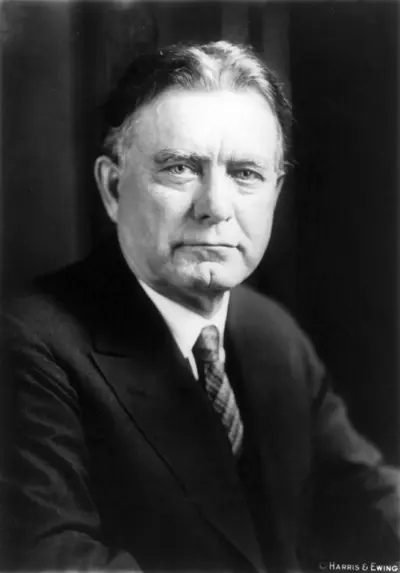
William Edgar Borah was an outspoken Republican United States Senator, one of the best-known figures in Idaho's history. A progressive who served from 1907 until his death in 1940, Borah is often considered an isolationist, because he led the Irreconcilables, senators who would not accept the Treaty of Versailles, Senate ratification of which would have made the U.S. part of the League of Nations.
