HENRY GRATTAN
This is sometimes referred to as the Irish Declaration of Independence.
Independence and Free Trade the two issues closest to his heart.
“Esto perpetua” is Latin for “May it be forever”. Ireland had just obtained the right from England to pass their own laws in their own parliament. They were still under English control but now they were like a colony and not under day-to-day control.
These were Catholic militias who armed themselves to protect against Protestant anti-Catholic violence. However, once organized they became a political force, a pattern which continued till modern times—organizations originally designed to protect against sectarian violence become major political forces, sometimes perpetrating more sectarian violence. Grattan, a parliamentarian unusual for his times, was one of the first to argue for the obligation of an elected member to the will of the electorate was offended by the Volunteers crudely trying to exercise political power while having no democratically elected leadership.
He lost be 2 votes.
The Chief Secretary, Lord Castleregh, had put forward a resolution to bring about the unification of Great Britain and Ireland under the single British Parliament at Westminster. He and his allies had bribed a number of the Irish MPs to support the union. With Union some Irish MPs would then be able to win seats representing Ireland in the British Parliament. Although Grattan and most of the Orangemen opposed the Union, 4 months later, the bill passed comfortably. Ironically, Grattan was one of the Irish MPs whose popularity won a seat in the unified British Parliament.
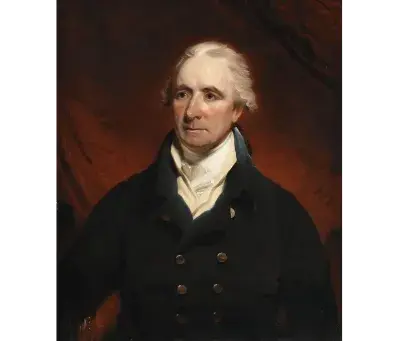
Henry Grattan was an Irish politician and lawyer who campaigned for legislative freedom for the Irish Parliament in the late 18th century from Britain. He was a Member of the Irish Parliament (MP) from 1775 to 1801 and a Member of Parliament (MP) from 1805 to 1820. He has been described as a superb orator and a romantic. With generous enthusiasm he demanded that Ireland should be granted its rightful status, that of an independent nation, though he always insisted that Ireland would remain linked to Great Britain by a common crown and by sharing a common political tradition.
