Henry Grattan Quotes
The British minister mistakes the Irish character. Had he intended to make Ireland a slave, he should have kept her a beggar. There is no middle policy … greatly emancipate or fundamentally destroy.
Henry Grattan, 1746-1820, Irish Member of British and Irish Parliaments, Speech to Irish Parliament, April 19, 1780
Sourced by: Eigen's Political and Historical Quotations

Burke argued for England giving America much more freedom and self determination.

The speech was never actually delivered, but instead the Bishop published it. It received wide distribution including in America where it was published by the Maryland Gazette on September 29, 1774.

The Parliament was debating the reaction to the Stamp Act by the American Colonies. One of the members, reflecting a majority view, asked sarcastically when the American Colonies had been emancipated so that they could make their own independent decisions. Pitt then hit this one out of the park by reversing the question.

Hopkins was complaining about the fact that England could tax the colonies and thereby take their property without their consent made the American colonists in the “miserable condition of slaves.” Essentially the fundamental complaint of the Americans was this and in a decade it would erupt as the American Revolution. At the same time, Hopkins was a slave owner and yet saw nothing wrong with that.


The Chief Secretary, Lord Castleregh, had put forward a resolution to bring about the unification of Great Britain and Ireland under the single British Parliament at Westminster. He and his allies had bribed a number of the Irish MPs to support the union. With Union some Irish MPs would then be able to win seats representing Ireland in the British Parliament. Although Grattan and most of the Orangemen opposed the Union, 4 months later, the bill passed comfortably. Ironically, Grattan was one of the Irish MPs whose popularity won a seat in the unified British Parliament.

This was written under the name of Ragnar Redbeard. There are a few scholars who believe that it was written by Jack London, but most credit Desmond.


Canada was then still under British rule.


The British saw the American colonies and the East Coast Canadian provinces all as their North American possessions. With the growing dissatisfaction of the New England and other Colonies, the British wanted to secure Quebec as a safe base where there were few rebels. Fox, of the opposition, criticized the heavy-handed control of Quebec wanting to give the rights of Englishmen under the English Constitution to all citizens of the North American colonies. Had Britain done so, there may never have been an American Revolution.

During the Reign of Terror of the French Revolution some powerful Frenchmen in the French Colonies wanted to maintain the caste system to keep the Blacks and other indigenous people from claiming equal rights. They claimed that the colonies would perish. But the French Revolutionaries were committed to “Liberty, Equality, and Fraternity”, and Barnave summed up their viewpoint in this succinct statement of policy which became a memorable quotation.


Executed by the English for his part in the Easter Uprising. Most revolutionaries seeking independence become so focused on their revolution that they begin to believe that independence will solve all problems. Connelly was one of the more sophisticated ones who realized that many of the economic problems of Ireland had nothing to do with independence or the lack thereof.
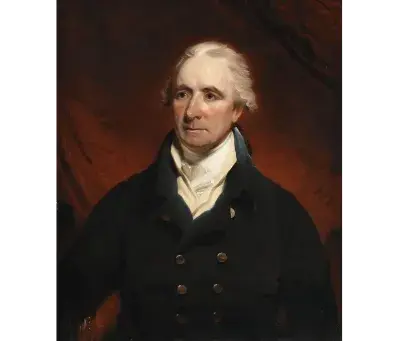
Henry Grattan was an Irish politician and lawyer who campaigned for legislative freedom for the Irish Parliament in the late 18th century from Britain. He was a Member of the Irish Parliament (MP) from 1775 to 1801 and a Member of Parliament (MP) from 1805 to 1820. He has been described as a superb orator and a romantic. With generous enthusiasm he demanded that Ireland should be granted its rightful status, that of an independent nation, though he always insisted that Ireland would remain linked to Great Britain by a common crown and by sharing a common political tradition.
