Jonathan Shipley Quotes
The idea of governing provinces and colonies by force is visionary and chimerical. The experiment has often been tried, and it has never succeeded. It ends infallibly in the ruin of one country or the other.
The speech was never actually delivered, but instead the Bishop published it. It received wide distribution including in America where it was published by the Maryland Gazette on September 29, 1774.
Jonathan Shipley, 1714-1788, English Protestant Bishop, Member of the House of Lords, Speech Prepared for Delivery in the House of Lords, 1774
Sourced by: Eigen's Political and Historical Quotations


James was a Catholic King and did not like Protestants but positively detested Puritans. He made good his and “harried them out of the land” much to the benefit of the American colonies to which they immigrated and the detriment of England. Many of the immigrants to America came for the religious freedom, but in the early days, no sooner did they arrive and become the majority, than they began to discriminate against other religions.

Barre, who had served as an officer in North American fighting with the Americans against the French, was a major opponent of the Stamp Act and other efforts to tax the American colonies. In the debate one of his opponents referred the American colonies as “planted by the care of England” and “nourished” by the mother country’s care. Barre was imprisoned in the Tower of London for a while for his vigorous defense of the American colonists.


The “We” to which he was referring were the British officials and civil servants who governed all of India as a colony of the British Empire.


This was written more than a year before the American Revolution Battles began. It took time to ship the men and supplies to America and the British did not handle that task with much efficiency. See {636926} for another of the King’s statements.


Hopkins was complaining about the fact that England could tax the colonies and thereby take their property without their consent made the American colonists in the “miserable condition of slaves.” Essentially the fundamental complaint of the Americans was this and in a decade it would erupt as the American Revolution. At the same time, Hopkins was a slave owner and yet saw nothing wrong with that.

This was the group that decided who was to be executed in the Reign of Terror

Paine was describing the conquest of England in 1066 by William the Conqueror.
At that time, Russia and Germany were autocracy, and the ruler could simply take the English money and force the soldiers to fight in a war they had not stake in nor understood.


Burke was one of the many members of the English Parliament who were opposed to a hard line in America in the beginning of the American Revolution and favored withdrawal after the hostilities began. The hard liners won un England and America was lost.

Earlier, his father had also castigated the ministers over their inept hard-line handling of the American Revolution. See {641505} .
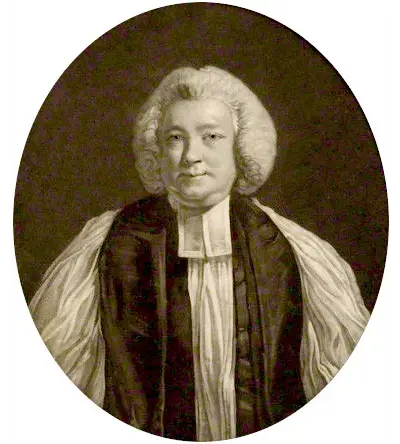
Jonathan Shipley was a clergyman who held offices in the Church of England (including Dean of Winchester from 1760 to 1769), who became Bishop of Llandaff from January to September 1769 and Bishop of St Asaph from September 1769 until his death.
