Denis Diderot Quotes
We are a free people; and now you have planted in our country the title deeds of our future slavery. You are neither god nor demon; who are you, then, to make slaves? Orou! You understand the language of these men, tell us all, as you have told me, what they have written on this sheet of metal: This country is ours. This country yours? And why? Because you have walked thereon? If a Tahitian landed one day on your shores, and scratched on one of your rocks or on the bark of your trees: This country belongs to the people of Tahiti - what would you think?
Diderot, Denis. Supplément au voyage de Bougainville. Oeuvres complètes de Diderot, edited by J. Assézat and M. Tourneux, Vol. 2, Garnier Frères, 1875, p. 212.


Paine was describing the conquest of England in 1066 by William the Conqueror.


Barre, who had served as an officer in North American fighting with the Americans against the French, was a major opponent of the Stamp Act and other efforts to tax the American colonies. In the debate one of his opponents referred the American colonies as “planted by the care of England” and “nourished” by the mother country’s care. Barre was imprisoned in the Tower of London for a while for his vigorous defense of the American colonists.


When the British first colonized South Africa, the area they used was not inhabited or very sparcely so. However, some Black tribes (including the Zulus) were moving from the north and themselves were colonizing or annexing the sparcely populated areas to their kingdom. The British were most interested in Trading so did not have large land asperations. The Dutch white Boer Africanners, in contrast, wanted to farm the lands and use the range for their cattle. They wanted the land. The English policy was that there would be friendly relations with the Black tribes surrounding their Cape Colony and no one should take their land. However the Boers started attacking the Black areas and seizing their farms and villages. At first, the English assumed that the Blacks would easily be able to ward off the invasion as the Afrikanners had no professional troops like the British. However, the neighboring native tribes were not very warlike or good fighters. They were being overrun by the Zulus coming from the North and the Boers from the South. The British Government had a real problem in that they would have to have British soldiers fight the white Afrikanners if they wanted to stop the illegal white invasions. This was the root of the Boer War where the British would be fully at war with the Africanners.

At the time, many of the European powers were seizing African and Asian colonies.


Burke argued for England giving America much more freedom and self determination.


In Russia at the time, serfs were little better off than slaves. Not only did they have to obey their landlords in all things, but any who advocated disobedience on their part were beaten and sent to Siberia. Exile to the Siberian Gulags was not an invention of the Communists of the 20th century although they used that punishment in unprecedented numbers. It was used by the Czars and the Empress.
Previous Sultans had developed a large army of Black Moors. Then there was a civil war in Morocco where the light skinned Moroccans fought against those of dark skin. The light skins won and the new Sultan ordered the remnants of the Black soldiers with their families to Larache where he surrounded them by Arabs and simply gave the Blacks to the light skinned Arabs as slaves.


Tension was high between England and America and war was rumored. The question of whether Blacks would fight for America as they had in the Revolution and the War of 1812 arose.

Referring to the Arawak natives he found when he landed in the "new world—San Salvador:"


The Union was ratified by the Nobles of Scotland despite widespread public opposition. There were substantial financial incentives in the terms of the Union for the leading nobles and members of Parliament.
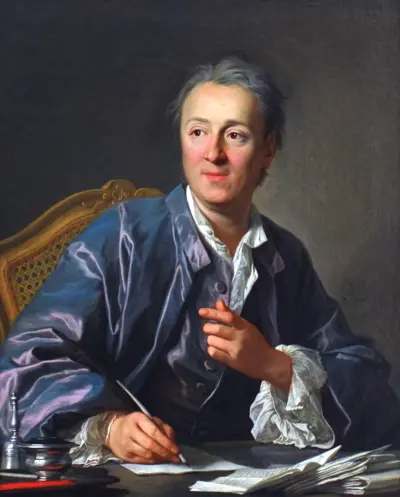
Denis Diderot was a French philosopher, art critic, and writer, best known for serving as co-founder, chief editor, and contributor to the Encyclopédie along with Jean le Rond d'Alembert. He was a prominent figure during the Age of Enlightenment.
