CATHERINE THE GREAT
(Catherine II | Sophie of Anhalt-Zerbst)
Although extremely enlightened and liberal in man ways, as an autocrat she saw virtues in monarchy.
The Empress provided freedom of religion in order to induce many settlers to immigrate to Russia. However, the clerics of the Russian Orthodox Church were terribly fearful that they would lose parishioners to other religions and they prevailed upon Catherine to outlaw preaching and conversion of the Russians. However, they were all for any attempt to convert the Muslims in the Russian Empier or at the borders. This limitation on conversion lasted until the Communist Revolution when the Communists even prohibited the Russian Orthodox from converting people. It was not until the fall of the Soviet Union that other religions were allowed to try and convert Russians and even then the number of sects that were allowed to do so were limited.
It is surprising that these ideas would come from one of the most autocratic powerful monarch in the world at the time. However there were many very liberal influences on her from Europe. This set of proposals she even sent to Voltaire to get his feedback and criticism. As late as 2006 the American President was reluctant to outlaw torture for terroristsand the Vice President actually argued for its retention as an interrogation technique. Over 300 years earlier the autocrat of Russia argued against it.
In Russia at the time, serfs were little better off than slaves. Not only did they have to obey their landlords in all things, but any who advocated disobedience on their part were beaten and sent to Siberia. Exile to the Siberian Gulags was not an invention of the Communists of the 20th century although they used that punishment in unprecedented numbers. It was used by the Czars and the Empress.
It is surprising that these ideas would come from one of the most autocratic powerful monarch in the world at the time. However there were many very liberal influences on her from Europe. This set of proposals she even sent to Voltaire to get his feedback and criticism.
In order to develop the country she invited immigrants to come to Russia and many did at the same time that England was encouraging immigrants to develop the lands and resources of America
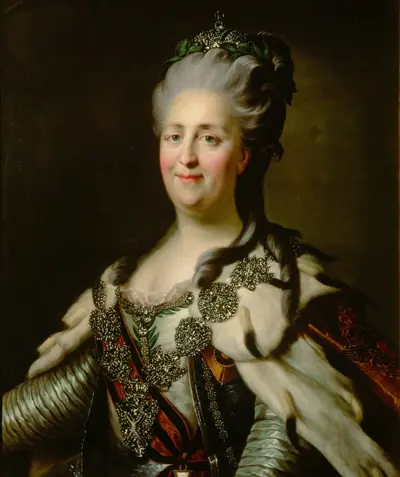
Catherine II, most commonly known as Catherine the Great, was empress regnant of All Russia from 1762 until 1796 – the country's longest-ruling female leader. She came to power following a coup d'état that overthrew her husband and second cousin, Peter III. Under her reign, Russia grew larger, its culture was revitalised, and it was recognized as one of the great powers of Europe.
