Edmund Burke Quotes
In effect we suffer as much at home as abroad; for, in order to prove that the Americans have no right to their liberties, we are every day endeavoring to subvert the maxims of our own. We never gain a paltry advantage over them in debate, without attacking some of those principles, or deriding some of those feelings, for which our ancestors have shed their blood
Burke was one of the many members of the English Parliament who were opposed to a hard line in America in the beginning of the American Revolution and favored withdrawal after the hostilities began. The hard liners won un England and America was lost.
Edmund Burke, 1729-1797, Irish Orator & Member of the British Parliament, Parliamentary debate about the American Revolution
Sourced by: Eigen's Political and Historical Quotations

The Parliament was debating the reaction to the Stamp Act by the American Colonies. One of the members, reflecting a majority view, asked sarcastically when the American Colonies had been emancipated so that they could make their own independent decisions. Pitt then hit this one out of the park by reversing the question.

Ministers refers to the Government Ministers, not to clergy.
Earlier, his father had also castigated the ministers over their inept hard-line handling of the American Revolution. See {641505} .


The first sentence of this quotation was a favorite of Paine's. He had earlier used it in Common Sense in 1776. See {635451}.

St. Domingue was the name of Haiti which had had the only successful national slave revolt, but it was incredibly bloody with many casualties.


Marion was the initiator of Guerilla Warfare and he and his men traveled lightly spending much time in the South Carolina swamps. They had few supplies and when chased by the British could not stop to hunt. The British called him the “Swamp Fox”. The American colonists at this point still thought of the British as “their countrymen.”

At that time, Russia and Germany were autocracy, and the ruler could simply take the English money and force the soldiers to fight in a war they had not stake in nor understood.


Coping with the French and their Indian allies was a problem for all the American colonies and Franklin was the strongest voice for some kind of union or federation for not only mutual defense, but to facilitate commerce by having some uniform currency and basic laws of trade to promote the mutual economy. The 6 Iroquois tribes had years ago formed the Iroquois nation complete with a formal constitution that maintained tribal identity but also enabled unified action if any were attacked and provided mutual assistance on a number of economic areas. They became the strongest, wealthiest, healthiest and most sophisticated nation of North America before European colonization and unlike many other Indians with a few exceptions–see {21747} for an example–got along very well with the English colonists. Franklin was a great admirer and wanted to use some of their Constitutional provisions in the American Constitution 36 years later, but at the time tried to embarrass many American's into forming a union with language like this quote. Actually, he did not think of them as savages at all, but most Americans who knew little about them did, and Franklin was never above using people's prejudices to get them to buy into one of his political ideas.

Hobson, like Mark Twain in America, was a major critic of imperialism.

Chile with help from San Martin had ejected the Spanish. O’Higgins, the Chilean leader had joined up with San Martin and served under his command. The sectional rivalry bothered men like Carrera. Instead of seeing all the South Americans fighting the Spanish as allies as O’Higgins did, Carrera and his brothers refused to join a government of unity and they and their troops were just as dictatorial and cruel as the Spanish had been. O’Higgins gave Indians and Blacks equal rights with whites which distressed the aristocratic Carrera’s. Finally the Carrera’s tried to set up their own government, and the new Chilean government disarmed their militia and executed two of the three Carrera brothers who were leading the militia troops who were little more than thieves and brigands.

The speech was never actually delivered, but instead the Bishop published it. It received wide distribution including in America where it was published by the Maryland Gazette on September 29, 1774.


The glorious spectacle of eighteen millions of people, struggling to burst their chains and be free.
The entire speech was translated into Spanish and read to great applause to Latin American revolutionary regiments.


British colonial economics imported raw materials to England which then exported them back to the colonies as manufactured goods. Gandhi correctly calculated that by minimizing purchase of English cloth, colonial control of India would not be as profitable. Gandhi not only called for the boycott, but called on Indians to spin their own cloth, set an example be spinning himself, and his Congress party adopted the spinning wheel as its logo and symbol which continues today. Narcotics, was at the time not only legal, but British economic interests controlled much of the world narcotics trade. Gandhi’s call for a boycott of narcotics was as much an economic tactic as it was a health measure.
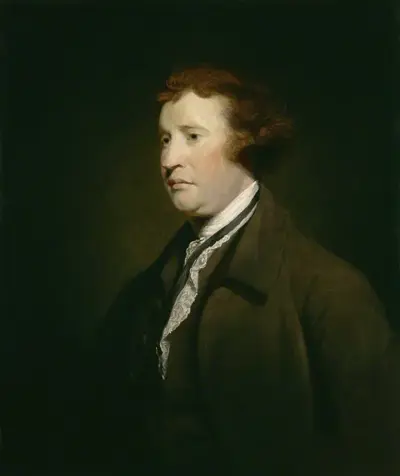
Edmund Burke was an Irish statesman, economist, and philosopher. Born in Dublin, Burke served as a member of parliament (MP) between 1766 and 1794 in the House of Commons of Great Britain with the Whig Party after moving to London in 1750.
