Thomas Paine Quotes
Freedom had been hunted round the globe; reason was considered as rebellion; and the slavery of fear had made men afraid to think. But such is the irresistible nature of truth, that all it asks, and all it wants, is the liberty of appearing.
The first sentence of this quotation was a favorite of Paine's. He had earlier used it in Common Sense in 1776. See {635451}.
Thomas Paine, 1737-1809, British American Political Philosopher, Rights of Man, 1791
Sourced by: Eigen's Political and Historical Quotations

The first sentence of this quotation was a favorite of Paine’s. As such he thought nothing of using it again in 1791. See {615405}.

Marion was the initiator of Guerilla Warfare and he and his men traveled lightly spending much time in the South Carolina swamps. They had few supplies and when chased by the British could not stop to hunt. The British called him the “Swamp Fox”. The American colonists at this point still thought of the British as “their countrymen.”


See Joseph Addison which may have been the inspiration for this famous quote: {613374}.


The Congress was encouraging all men volunteer for the military and defend the new nation now that the British were landing in force to put down the revolution. By modern language standards, this is a little “over the top” but it shows not only the passion felt by the Congress but the importance they placed on the struggle.

Chile with help from San Martin had ejected the Spanish. O’Higgins, the Chilean leader had joined up with San Martin and served under his command. The sectional rivalry bothered men like Carrera. Instead of seeing all the South Americans fighting the Spanish as allies as O’Higgins did, Carrera and his brothers refused to join a government of unity and they and their troops were just as dictatorial and cruel as the Spanish had been. O’Higgins gave Indians and Blacks equal rights with whites which distressed the aristocratic Carrera’s. Finally the Carrera’s tried to set up their own government, and the new Chilean government disarmed their militia and executed two of the three Carrera brothers who were leading the militia troops who were little more than thieves and brigands.

The Parliament was debating the reaction to the Stamp Act by the American Colonies. One of the members, reflecting a majority view, asked sarcastically when the American Colonies had been emancipated so that they could make their own independent decisions. Pitt then hit this one out of the park by reversing the question.


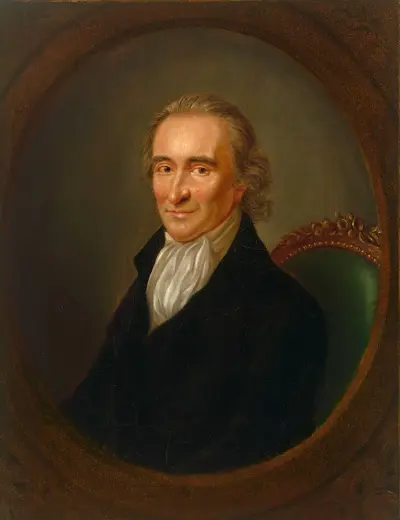
- Born: February 9, 1737
- Died: June 8, 1809
- Nationality: English
- Profession: Writer
Thomas Paine was an English-born American political activist, philosopher, political theorist, and revolutionary. He authored Common Sense (1776) and The American Crisis (1776–1783), the two most influential pamphlets at the start of the American Revolution, and helped inspire the patriots in 1776 to declare independence from Great Britain. His ideas reflected Enlightenment-era ideals of transnational human rights. Historian Saul K. Padover described him as "a corsetmaker by trade, a journalist by profession, and a propagandist by inclination".
