John Locke Quotes
Whenever the legislators endeavor to take away and destroy the property of the people, or to reduce them to slavery under arbitrary power, they put themselves into a state of war with the people, who are thereupon absolved from any further obedience.
John Locke, 1632-1704, English Political Philosopher, 1690
Sourced by: Eigen's Political and Historical Quotations

The first sentence of this quotation was a favorite of Paine's. He had earlier used it in Common Sense in 1776. See {635451}.

Mackenzie was a British officer with whom Washington had become friends in the French & Indian War and in this letter, Washington was trying to explain the seriousness of the Boston rebellion for Britain.

Tamoyo ceased publication in 1823. It’s name comes from the name of an indigenous Indian tribe. A region of Brazil has been given the same name.
Hopkins was complaining about the fact that England could tax the colonies and thereby take their property without their consent made the American colonists in the “miserable condition of slaves.” Essentially the fundamental complaint of the Americans was this and in a decade it would erupt as the American Revolution. At the same time, Hopkins was a slave owner and yet saw nothing wrong with that.

Marion was the initiator of Guerilla Warfare and he and his men traveled lightly spending much time in the South Carolina swamps. They had few supplies and when chased by the British could not stop to hunt. The British called him the “Swamp Fox”. The American colonists at this point still thought of the British as “their countrymen.”


He fought in Algeria and other counterinsurgencies and then studied them. He wrote the classic book on counterinsurgency warfare. After all the mistakes the U. S. made after the successful invasion of Iraq, his book and doctrine were very influential in the change in strategy and tactics that turned the Iraq War in our favor.

The Congress was encouraging all men volunteer for the military and defend the new nation now that the British were landing in force to put down the revolution. By modern language standards, this is a little “over the top” but it shows not only the passion felt by the Congress but the importance they placed on the struggle.

This quotation is a great demonstration of how much wiser and the better politician of all the crowned heads of Europe that Queen Victoria was. There were stirrings of freedom and desire for parliamentary government throughout Europe. Queen Victoria, even though and perhaps because she was a young woman, had a great feel for fairness and reasonableness and had read a great deal of history. There were some radical red socialists calling for complete radical revolution scaring European Royalty profoundly. They reacted very conservatively and with reaction, reverting to more tyrannical practices of the past urged in that path by very conservative, right wing advisors. Victoria also had little respect for some of the monarchs who had little interest in their people and much with their personal power and wealth. In the end, it was England which was the only nation which never had a serious radical socialist / communist threat, and that had much to do with Victoria’s political acumen and wisdom.


Character Franklin invented early in his career
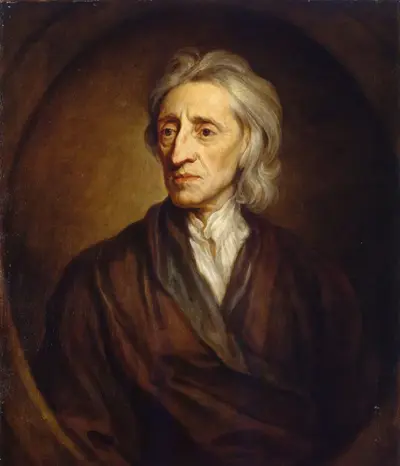
John Locke FRS was an English philosopher and physician, widely regarded as one of the most influential of Enlightenment thinkers and commonly known as the "Father of Liberalism". Considered one of the first of the British empiricists, following the tradition of Sir Francis Bacon, Locke is equally important to social contract theory. His work greatly affected the development of epistemology and political philosophy. His writings influenced Voltaire and Jean-Jacques Rousseau, and many Scottish Enlightenment thinkers, as well as the American Revolutionaries. His contributions to classical republicanism and liberal theory are reflected in the United States Declaration of Independence.
