HENRY CLAY
(Henry Clay Sr.)


Simon Bolivar and other freedom fighters in South America used this quotation to justify numerous acts of retaliation against the Spanish troops controlling their countries.
The glorious spectacle of eighteen millions of people, struggling to burst their chains and be free.
The entire speech was translated into Spanish and read to great applause to Latin American revolutionary regiments.
When he first came to Congress, there were major American problems with both France and England who were fighting each other and punishing America for not boycotting the other nation. Many argued for peace and living with the French and English impression of American seamen and confiscation of American Cargoes. Clay and others thought the appeasement price was too high and urged war. The War of 1812 followed.
This remarkable quotation shows that this great Southern leader, 15 years before the Civil War, publicly stated that the institution of slavery was doomed to extinction. As such it was not worth worrying about in such issues as new territories of the Union and other more important and long lasting things. This quotation however is not commonly cited.
In many of the non—slave states, free negroes were not allowed to enter or reside in the state
The United States government had for many years deposited all its funds in a single private bank, the Bank of the United States. In 1833, President Andrew Jackson, without any congressional authorization, ordered the federal deposits to be distributed among state banks instead. The Senate was furious and passed the first resolution of censure of a President in United States history:. Carried by a vote of 26 to 20. Four years later a pro-Jackson Senate majority voted to expunge the resolution.
“Dey” and “bey” were Arabic terms for the local ruler of an area.
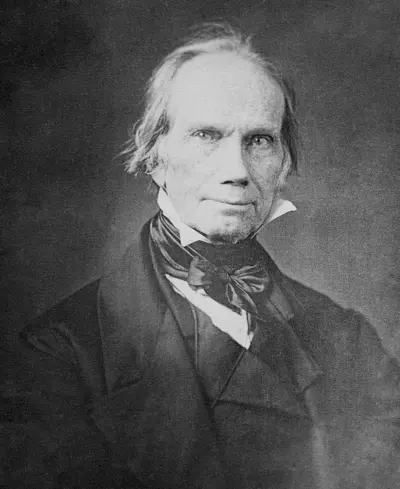
Henry Clay Sr. was an American attorney and statesman who represented Kentucky in both the Senate and House. He was the seventh House Speaker and the ninth Secretary of State. He received electoral votes for president in the 1824, 1832, and 1844 presidential elections. He also helped found both the National Republican Party and the Whig Party. For his role in defusing sectional crises, he earned the appellation of the "Great Compromiser" and was part of the "Great Triumvirate".
