Henry Clay Quotes
Yes, sir, from Constantinople, or from the Brazils; from Turk or Christian; from black or white; from the dey of Algiers or the bey of Tunis; from the devil himself, if he wore a crown, we should receive a minister.
“Dey” and “bey” were Arabic terms for the local ruler of an area.
Henry Clay, 1777-1852, U.S. Congressman and Senator (National Republican & Whig, KY), Speech in the House of Representatives, March 28, 1818
Sourced by: Eigen's Political and Historical Quotations


Terrorists in Iraq had murdered the Egyptian Ambassador a few weeks before. Although not generally known, being a diplomat in a foreign country has substantial risk.


In 1904 the Archduchess of Austria was visiting the Adriatic port of Fiume where hundreds of immigrants to America were waiting to board the ship. The nobility of the time found amusement in the poor immigrants boarding with their meager possessions and poor clothes. The Archduchess wanted the people to board 3 days early so she could watch the spectacle before she left. They would then have to stay in the steerage of the ship for 3 extra days. The American consul refused to issue the necessary papers until just before the sailing:

The Constitution was not drafted until 1787 and was ratified later. In the interim the young United States functioned under the Articles of Confederation, in a sense, our first Constitution. This clause established that the Federal Government should have the exclusive power and authority to conduct foreign affairs.


Diplomatic recognition of the People’s Republic of China was being debated. Many of Churchill’s Conservative Party Colleagues were opposed on the grounds that diplomatic relations gives a signal of legitimacy. In the U. S. this general issue is a constant source of political controversy when diplomatic relations and talks are considered with Iran, Cuba and North Korea.

There have been times in democracies where a foreign ministry (State Department) is isolated from the elected politicians and implements a foreign policy that is at odds with the wishes of the elected officials and the majority of the nation. A good American example of this was in 1948 where America had to decide whether to support the creation of the State of Israel in the United Nations and through diplomatic recognition. The professional diplomats in the State Department had developed very close relations with Arab States, and many State Department employees were anti-Semitic. In addition, they thought the most important thing for America was not to risk the Arab oil supply. Meanwhile, the people, Congress, and President Truman were on the other side and Truman had to finally order The Secretary of State to stop his professional diplomats from pursuing their own foreign policy preferences. Even then some did not.

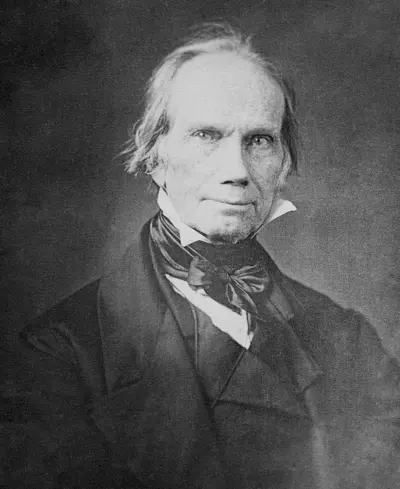
Henry Clay Sr. was an American attorney and statesman who represented Kentucky in both the Senate and House. He was the seventh House Speaker and the ninth Secretary of State. He received electoral votes for president in the 1824, 1832, and 1844 presidential elections. He also helped found both the National Republican Party and the Whig Party. For his role in defusing sectional crises, he earned the appellation of the "Great Compromiser" and was part of the "Great Triumvirate".
