Elliott Abrams Quotes
In most cases, cables are marked secret not because the U.S. requires it but because those speaking to us - the foreign leaders across the table - do. They are not keeping secrets from us, but from two other groups: their enemies and their subjects.
Abrams, Elliott. "Why Cables Are Secret." Newsweek, 29 Nov. 2010.


The Prime Minister was visiting the United States and was staying at the White House. President Roosevelt had a spontaneous thought and wheeled himself into Churchill's room. The Prime Minister was stark naked, having just emerged from the bath. Roosevelt apologized but Churchill was unfazed and known for his nudity in his private quarters. He even used what might have been an awkward moment into an opportunity to make a political point.


Kennan was talking about the Russians, but the same principle seems to hold with any autocratic government and in some cases even democracies. However, the tradition of secret diplomacy with no transparency is established even in many democracies. Great Britain and France, for example conduct most of their diplomacy in secret as do less democratic governments and tyrannies. They expect us to keep negotiations confidential, which causes American diplomats to be torn between the American view of transparency and the tradition of confidentiality.


She was decrying a practice where the Untied States would not negotiate or meet directly with Iran and were communicating diplomatically through other nations diplomats.

President Wilson had gone to Paris for peace treaty negotiations. Ex-President Roosevelt was on his deathbed. But even then TR was his politically contentious self.


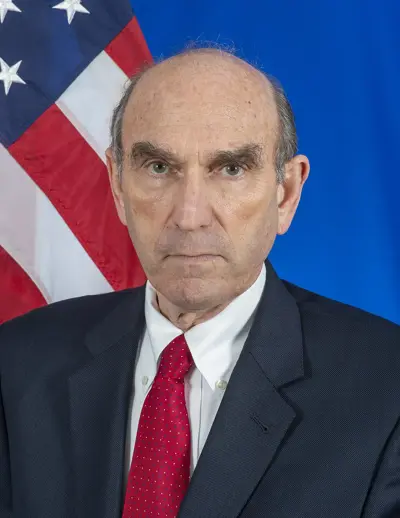
Elliott Abrams is an American politician and lawyer, who has served in foreign policy positions for Presidents Ronald Reagan, George W. Bush, and Donald Trump. Abrams is considered to be a neoconservative. He is currently a senior fellow for Middle Eastern studies at the Council on Foreign Relations. On January 25, 2019, he was appointed as Special Representative for Venezuela. On September 1, 2020, he was further appointed to concurrently serve as the U.S. Special Representative for Iran.
