Margaret Sanger Quotes
Diplomats make it their business to conceal the facts, and politicians violently denounce the politicians of other countries.
Sanger, Margaret. The Pivot of Civilization. Brentano's, 1922, p. 143.


The basic treaty sold some of Ethiopia’s colonial territory (Eritrea and Tigray) to Italy in exchange for arms. Italy had tried to conquer the area but lost 500 men in the Battle of Dogali. However, after this peace treaty, Italy maintained that Article 17 of the treaty gave them the right to declare Ethiopia an Italian Protectorate which they did. However, there were two different versions of the treaty that the Italians had drawn up—one in Italian, the other in Aramaic. Britain, Belgium and Germany supported Italy; France, Turkey and Russia supported Ethiopia. Menelik then, to make matters clear, repudiated the treaty in 1893. Italy send an invasion force that was soundly thrashed by the Ethiopians setting the stage for the Italian attack on Ethiopia in World War II years later. Parties to International treaties thereafter have paid close attention to the different language versions.


“Dey” and “bey” were Arabic terms for the local ruler of an area.

There have been times in democracies where a foreign ministry (State Department) is isolated from the elected politicians and implements a foreign policy that is at odds with the wishes of the elected officials and the majority of the nation. A good American example of this was in 1948 where America had to decide whether to support the creation of the State of Israel in the United Nations and through diplomatic recognition. The professional diplomats in the State Department had developed very close relations with Arab States, and many State Department employees were anti-Semitic. In addition, they thought the most important thing for America was not to risk the Arab oil supply. Meanwhile, the people, Congress, and President Truman were on the other side and Truman had to finally order The Secretary of State to stop his professional diplomats from pursuing their own foreign policy preferences. Even then some did not.

Diplomatic recognition of the People’s Republic of China was being debated. Many of Churchill’s Conservative Party Colleagues were opposed on the grounds that diplomatic relations gives a signal of legitimacy. In the U. S. this general issue is a constant source of political controversy when diplomatic relations and talks are considered with Iran, Cuba and North Korea.

2nd Viscount Melbourne. The “American treaty” was the Webster–Ashburton Treaty to adjust the final borders between Canada and the United States that were still in dispute from the War of 1812. Note that the British Prime Minister was critical of the position that was being taken be some British diplomats. In many American negotiations with Russia and others, there are hard liners who believe that the negotiators want too much to preserve peace and are not sufficiently willing to go to war for the nation’s principles and honor. As this quotation shows, this is not just an American phenomenon, but in almost all nations there are hard liners critical of all international negotiations and fearing that a desire for an agreement will undermine the positions that should be taken. This is an example where the hard liners were on the non American side.


With promises the success lies in following through and keeping the promise which is usually very costly. A threat that fails meanwhile can be the most expensive thing. We make a threat to deter a foreign power from something. Failure occurs when they are not intimidated and go ahead anyway. Then if we follow through on the threat, that is very costly—a war, a trade embargo, or whatever. Not following through on the threat is the costliest of all as we lose our credibility, trust and honor.

“The word “monitoring” is a polite diplomatic word for “spying on”. She made this statement in July of 2014 when the Germans discovered that the United States was spying on their government and ejected key Americans from the country. Albright was explaining that this is extremely common and “normal” between allies. See {640830} for more on this subject.


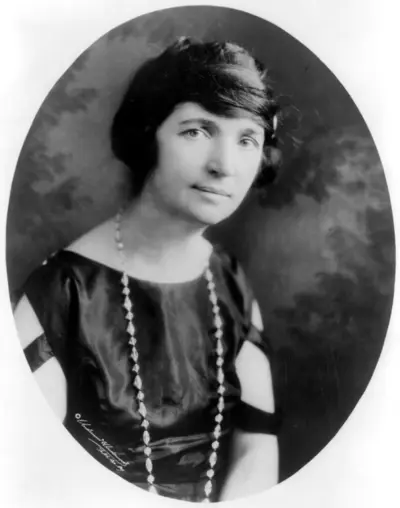
Margaret Higgins Sanger was an American birth control activist, sex educator, writer, and nurse. Sanger popularized the term "birth control", opened the first birth control clinic in the United States, and established organizations that evolved into the Planned Parenthood Federation of America.
