Evgeny Morozov Quotes
Diplomacy is, perhaps, one element of the U.S. government that should not be subject to the demands of 'open government'; whenever it works, it is usually because it is done behind closed doors. But this may be increasingly hard to achieve in the age of Twittering bureaucrats.
Morozov, Evgeny. The Net Delusion: The Dark Side of Internet Freedom. PublicAffairs, 2011.


The notion of Executive Privilege developed over the years. Our first President thought nothing of giving the Senate access to all the papers and records regarding the negotiations of the treaty with Great Britain.


Her experience in the United Nations made her realize that most of the foreign policies of the more powerful and sophisticated countries were stated in such complex, nuanced, and politically coded language, that most of the literate and educated people in many countries could not understand them. This was, and is today, often true of many government officials around the world.


Senator Dianne Feinstein, Chairman of the Senate Intelligence Committee, had released an unclassified Summary of the Committee Report on the CIA using torture and perverse treatment of suspect terrorists in the aftermath of the 9-11 attack on New York. Most Republicans argued vehemently that the Report should be classified and kept secret as the CIA behavior was so egregious, unpalatable, and morally reprehensible that there would be negative consequences including perhaps demonstrations and attacks against Americans in foreign countries. Moreover, Terrorist organizations would use the heinous CIA behavior as a recruiting tool for anti-American terrorists. McCain, who had himself been the victim of North Vietnamese torture cited the moral and ethical reasons to prohibit torture but also explained what has been proven over and over again that torture victims will tell the torturer any nonsense that they think the torturer might believe just to get obtain relief from the agony of the torture.
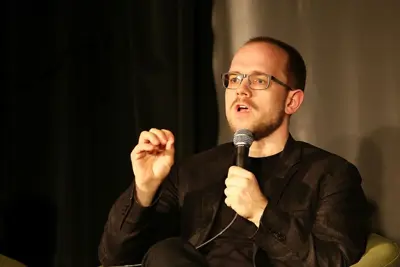
Evgeny Morozov (Russian: Eвге́ний Моро́зов; Belarusian: Яўгені Марозаў; born in 1984) is an American writer, researcher, and intellectual from Belarus who studies political and social implications of technology. He was named one of the 28 most influential Europeans by Politico in 2018.
