A. J. P. Taylor Quotes
The Foreign Office knows no secrets.
Taylor, A. J. P. The Struggle for Mastery in Europe 1848-1918. Oxford University Press, 1954.


The Prime Minister was visiting the United States and was staying at the White House. President Roosevelt had a spontaneous thought and wheeled himself into Churchill's room. The Prime Minister was stark naked, having just emerged from the bath. Roosevelt apologized but Churchill was unfazed and known for his nudity in his private quarters. He even used what might have been an awkward moment into an opportunity to make a political point.

At the time Holland was a republic and a confederation of different states. There was an assembly of delegations from each of the States but most important decisions tended to be made by the Prince and a few of the representatives in his sway. Mathenesse was the delegate of the largest and wealthiest state but even others in his state delegation were out of the loop. Others claimed that the necessity of secrecy was just a pretext for a small group to dominate the republic. See {620069}. This battle goes on in almost every country including the United States where there are many matters in which only a few members of Congress and the President make decisions with national security given as the reason. In many cases there has been such a reason, but it is very easily corrupted into a pretext as only the people on the inside who get to make the decision know what the secret material was.

The “gentleman” was a member of Congress. This is an issue between the Congress and the Executive Branch which has existed as long as our Republic: Whether all members of Congress should have access to all classified secret information of the Government. Mrs. Roosevelt who was usually an advocate of transparency, on this issue tended to side with the argument of the executive branch. Note that the arguments made in 1939 are still fought over today.
The improved access comes from the rapid technological and economic development of open source information available to the public. Governments will also benefit although governments will not be able to maintain as much secrecy,


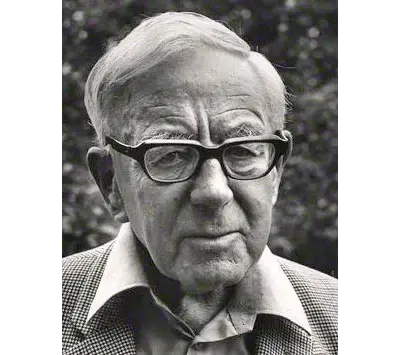
Alan John Percivale Taylor FBA was a British historian who specialised in 19th- and 20th-century European diplomacy. Both a journalist and a broadcaster, he became well known to millions through his television lectures. His combination of academic rigour and popular appeal led the historian Richard Overy to describe him as "the Macaulay of our age". In a 2011 poll by History Today magazine, he was named the fourth most important historian of the previous 60 years.
