George Washington Quotes
I have no disposition to withhold any information which the duty of my station will permit, or the public good shall require to be disclosed: and in fact, all the Papers affecting the negotiation with Great Britain were laid before the Senate, when the Treaty itself was communicated for their consideration and advice
The notion of Executive Privilege developed over the years. Our first President thought nothing of giving the Senate access to all the papers and records regarding the negotiations of the treaty with Great Britain.
George Washington, 1732-1799, 1st President of the United States (VA), Address to the House of Representatives, March 30, 1796
Sourced by: Eigen's Political and Historical Quotations


The “gentleman” was a member of Congress. This is an issue between the Congress and the Executive Branch which has existed as long as our Republic: Whether all members of Congress should have access to all classified secret information of the Government. Mrs. Roosevelt who was usually an advocate of transparency, on this issue tended to side with the argument of the executive branch. Note that the arguments made in 1939 are still fought over today.


The Constitution was not drafted until 1787 and was ratified later. In the interim the young United States functioned under the Articles of Confederation, in a sense, our first Constitution. This clause established that the Federal Government should have the exclusive power and authority to conduct foreign affairs.

The Prime Minister was visiting the United States and was staying at the White House. President Roosevelt had a spontaneous thought and wheeled himself into Churchill's room. The Prime Minister was stark naked, having just emerged from the bath. Roosevelt apologized but Churchill was unfazed and known for his nudity in his private quarters. He even used what might have been an awkward moment into an opportunity to make a political point.


Vice President Dick Cheney accidentally shot a friend in a hunting accident becoming the first U. S. Vice President to shoot a man since Aaron Burr shot Alexander Hamilton. However, the Vice President and his staff did not make the shooting public till the next day and then by having a member of the hunting party call a small local, friendly, Texas newspaper. Finally, under great pressure the Vice President gave an interview to the Fox News Network, the network who had been most favorable in reporting on the administration.

Senator Dianne Feinstein, Chairman of the Senate Intelligence Committee, had released an unclassified Summary of the Committee Report on the CIA using torture and perverse treatment of suspect terrorists in the aftermath of the 9-11 attack on New York. Most Republicans argued vehemently that the Report should be classified and kept secret as the CIA behavior was so egregious, unpalatable, and morally reprehensible that there would be negative consequences including perhaps demonstrations and attacks against Americans in foreign countries. Moreover, Terrorist organizations would use the heinous CIA behavior as a recruiting tool for anti-American terrorists. McCain, who had himself been the victim of North Vietnamese torture cited the moral and ethical reasons to prohibit torture but also explained what has been proven over and over again that torture victims will tell the torturer any nonsense that they think the torturer might believe just to get obtain relief from the agony of the torture.

Diplomatic recognition of the People’s Republic of China was being debated. Many of Churchill’s Conservative Party Colleagues were opposed on the grounds that diplomatic relations gives a signal of legitimacy. In the U. S. this general issue is a constant source of political controversy when diplomatic relations and talks are considered with Iran, Cuba and North Korea.


Because the Senate has not ratified some international treaties, the United States does not participate in some international efforts to create international rules and law. The reason for non-ratification is generally given as potential loss of American sovereignty. At the same time, we spend billions of dollars trying to influence and shape the world along free market, democratic lines, and then are not able to participate in some of the most important forums where we could do just that. It is a constant dilemma and the Senate goes both ways depending on its mood, public opinion at the time and the political composition of the Senate. See {637031} and {637032}.

It was only since Theodore Roosevelt’s presidency that the public received very much information about what the nation’s foreign policy was or was even desired except in time of war.

The Republican controlled Senate had turned down the ratification of the League of Nations presented by Democratic President Wilson, and looked like they would turn down any international treaty even if presented by a Republican President. This statement allowed the treaty ratification by only a few votes. However, after that the Senate turned down our participation in the Permanent Court of Arbitration at the Hague. See {640099}.


There have been times in democracies where a foreign ministry (State Department) is isolated from the elected politicians and implements a foreign policy that is at odds with the wishes of the elected officials and the majority of the nation. A good American example of this was in 1948 where America had to decide whether to support the creation of the State of Israel in the United Nations and through diplomatic recognition. The professional diplomats in the State Department had developed very close relations with Arab States, and many State Department employees were anti-Semitic. In addition, they thought the most important thing for America was not to risk the Arab oil supply. Meanwhile, the people, Congress, and President Truman were on the other side and Truman had to finally order The Secretary of State to stop his professional diplomats from pursuing their own foreign policy preferences. Even then some did not.


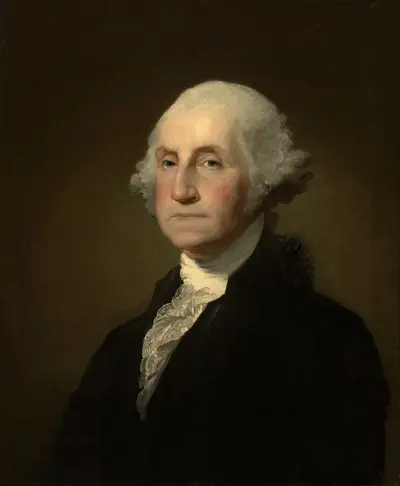
George Washington was the first President of the United States (1789-97), the Commander-in-Chief of the Continental Army during the American Revolutionary War, and one of the Founding Fathers of the United States. He presided over the convention that drafted the current United States Constitution and during his lifetime was called the "father of his country".
