Warren G. Harding Quotes
Frankly, Senators, if nations may not safely agree to respect each other’s rights, and may not agree to confer if one party to the compact threatens trespass, or may not agree to advise if one party to the pact is threatened by an outside power, then all concerted efforts to tranquilize the world and stabilize peace must be flung to the winds. Either these treaties must have your cordial sanction, or every proclaimed desire to promote peace and prevent war becomes a hollow mockery
The Republican controlled Senate had turned down the ratification of the League of Nations presented by Democratic President Wilson, and looked like they would turn down any international treaty even if presented by a Republican President. This statement allowed the treaty ratification by only a few votes. However, after that the Senate turned down our participation in the Permanent Court of Arbitration at the Hague. See {640099}.
Warren G. Harding, 1865-1923, 29th President of the United States (Republican, OH), Address presenting the "Four Power Pacific Pact" to the Senate, Quoted in George W. Wickersham, “The Senate and Our Foreign Relations”, Foreign Affairs, December 1923
Sourced by: Eigen's Political and Historical Quotations

The Senate refused to ratify.


There were many who thought that the Russians would view the Mutual Security Act as aggressive and they might respond with some kind of aggressive retaliation and this could lead to war. Others felt that containment would reduce the likelihood of war.


3rd Earl Russell of Kingston. The military weak nations agreed with him, but the militarily strong ones did not—especially America and England which had the Atomic Bomb when others did not.


See Benedict Spinosa for an earlier absense or war view. Also, JFK more recently.


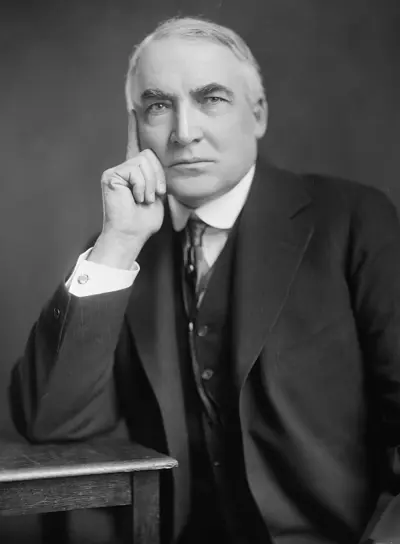
- Born: November 2, 1865
- Died: August 2, 1923
- Nationality: American
- Profession: President
Warren Gamaliel Harding was the 29th president of the United States, serving from 1921 until his death in 1923. A member of the Republican Party, he was one of the most popular U.S. presidents to that point. After his death, a number of scandals, including Teapot Dome, came to light, as did his extramarital affair with Nan Britton; those eroded his popular regard.
