Michelle Bachelet Quotes
The duty of defense is maintain peace and avoid war.
Michelle Bachelet, Minister of Defense, Chile, New York Times Interview, January 4, 2003
Sourced by: Eigen's Political and Historical Quotations

There were many who thought that the Russians would view the Mutual Security Act as aggressive and they might respond with some kind of aggressive retaliation and this could lead to war. Others felt that containment would reduce the likelihood of war.


The Republican controlled Senate had turned down the ratification of the League of Nations presented by Democratic President Wilson, and looked like they would turn down any international treaty even if presented by a Republican President. This statement allowed the treaty ratification by only a few votes. However, after that the Senate turned down our participation in the Permanent Court of Arbitration at the Hague. See {640099}.


Hitler ridiculed the letter after receiving it in public speech.


3rd Earl Russell of Kingston. The military weak nations agreed with him, but the militarily strong ones did not—especially America and England which had the Atomic Bomb when others did not.


Israel started it nuclear weapons program under Perez’s leadership. They do not admit that it is even in existence. Yet all their potential enemies in the Middle East realize that they have enough nuclear weapons capacity that if they are in danger of being overrun, they can literally destroy the attacking nation and all the countries that might be assisting that nation. Before Israel had developed this capability, some in the Middle East had as their objective to destroy the state of Israel and “drive the Jews into the sea”. No one believes that it is now possible to militarily defeat Israel without the attacking nations also being destroyed. For years, Israel has had the military might to conquer any nation in the Middle East and use their nuclear shield to protect them from any interference, but they have not done so demonstrating that the Israeli governments will not use nuclear weapons for any other purpose.


Actually, the two world wars were wars of necessity. The Korean War and the Vietnam war are considered by many as wars of choice. But most of our military incursions—the Mexican War, the Spanish American War, Grenada, the Serbian War, Hati incursions and many others were wars of choice for which there were often very good reasons. However, we have to go to war when America is existentially threatened. In that sense, the Iraq War which Kerry was primarily addressing, could be interpreted either way. If it was really true thread. That is what caused most members of Congress to vote to approve the war. However, when that turned out to have been untrue, and it was suspected that the weapons of mass destruction was a deliberate ruse by some.

This was written when the United States was not a dominant military power. At the beginning of the 20th century, the U. S. had the same size military as Argentina. It was France, German, Turkey and England who had the military superiority and it was they who tended to find excuses for war. After WWII, the U. S. was dominant and was involved with a number of wars and military incursions, often with nations that had not attacked the U.S. Korns’ principle was most dramatic when the George W. Bush administration invaded Iraq on the excuse that the Iraqis were developing weapons of mass destructions and then might attack the United States. After the successful invasion, the excuse was shown to be hollow as there were no signs of sophisticated weapons development.
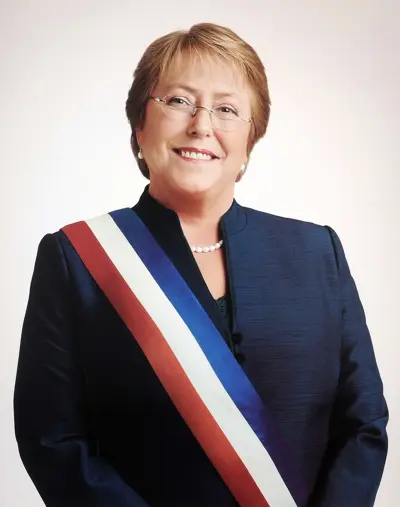
Verónica Michelle Bachelet Jeria is a Chilean politician who has served as United Nations High Commissioner for Human Rights since 2018. She also previously served as President of Chile from 2006 to 2010 and 2014 to 2018 for the Socialist Party of Chile, she is the first woman to hold the Chilean presidency. After leaving the presidency in 2010 and while not immediately reelectable, she was appointed the first executive director of the newly created United Nations Entity for Gender Equality and the Empowerment of Women. In December 2013, Bachelet was reelected with over 62% of the vote, bettering the 54% she obtained in 2006. She was the first President of Chile to be reelected since 1932.
