Shimon Peres Quotes
I built a nuclear option to get peace, not to have bombs. Our enemies learned that they could not destroy us.
Israel started it nuclear weapons program under Perez’s leadership. They do not admit that it is even in existence. Yet all their potential enemies in the Middle East realize that they have enough nuclear weapons capacity that if they are in danger of being overrun, they can literally destroy the attacking nation and all the countries that might be assisting that nation. Before Israel had developed this capability, some in the Middle East had as their objective to destroy the state of Israel and “drive the Jews into the sea”. No one believes that it is now possible to militarily defeat Israel without the attacking nations also being destroyed. For years, Israel has had the military might to conquer any nation in the Middle East and use their nuclear shield to protect them from any interference, but they have not done so demonstrating that the Israeli governments will not use nuclear weapons for any other purpose.
Shimon Peres, Israeli Prime Minister (Labour), President of Israel, Nobel Peace Laureate, Quoted on BBC World News, August 4, 2013
Sourced by: Eigen's Political and Historical Quotations


The President had asked for the views of the Joint Chief’s of Staff. At the time, the major U. S. defense doctrine depended on our nuclear deterrent which if used against the Russians would have meant mutually assured destruction since they had enough of a nuclear arsenal to destroy America as we know it.


There were many who thought that the Russians would view the Mutual Security Act as aggressive and they might respond with some kind of aggressive retaliation and this could lead to war. Others felt that containment would reduce the likelihood of war.

Canada had the same absurd civil defense propaganda in the Cold War as the U. S. did. Both governments wanted to persuade their publics that a nuclear attack was survivable.

One new danger that nuclear powers add to the usual problems of conflict, is that a nuclear power, about to lose a war in a humiliating way, might just use his nuclear weapons in revenge. So much damage will be done that the victory turned out to have been a bad thing. So ironically, with a nuclear enemy. Your military dare not win to dominantly with conventional weapons.

This was his last publication. He died of a heart attack as the magazine was being printed. Since this was written one other possible use of nuclear weapons has been suggested—namely, retaliation for a biological attack. From a policy point of view, maintaining an arsenal of biological weapons for retaliatory purposes is dangerous and use for retaliation of biological weapons is not very controllable and arguably less humane than a nuclear weapon. His point however still holds. We have to have a national defense policy against many threats and we have to have defense policies that handle all these without nuclear tactics is insufficient to handle any of the threats without causing more problems and we have other weapons and techniques that are just as, if not more, effective. They and systems under development have the major role in our current defense policy.


Israel's Arab enemies do not simply want to control the territory and/or the economic resources. Their aim, overtly stated thousands of times since the formation of Israel, is to "drive the Jews into the sea", murder the population, obtain revenge for their percieved humiliation that "foreigners" to the region and their religion could build a society so far advanced compared to Arabs on the harsh land abd without any of the oil riches that some of the Arab states had. Israel has won all the wars that the Arabs have initiated, and never murdered the population, and provide the "occupied territiries" with better medicine and infrastructure than the Arabs achieve on their own.


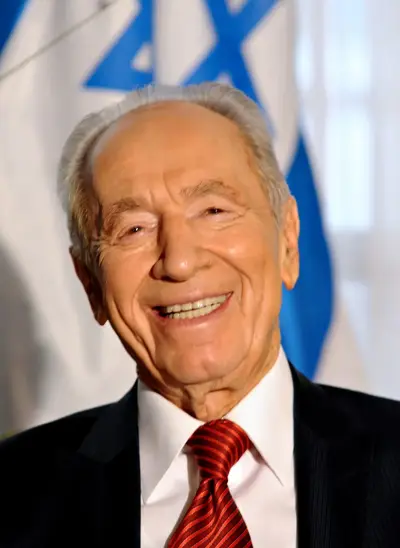
Shimon Peres was an Israeli politician who served both as ninth President of Israel, (2007–2014) and Prime Minister of Israel, as well as Interim Prime Minister. He was a member of twelve cabinets in a political career spanning nearly 70 years. Peres was elected to the Knesset in November 1959 and, except for a three-month-long hiatus in early 2006, was in office continuously until 2007, when he became President, being in that role for another seven years. At the time of his retirement in 2014, he was the world's oldest head of state. He was considered the last link to Israel's founding generation.
