Ahmed Nazif Quotes
We will definitely not allow the killing of our Iraqi Ambassador to deny us the right to have an ambassador.
Terrorists in Iraq had murdered the Egyptian Ambassador a few weeks before. Although not generally known, being a diplomat in a foreign country has substantial risk.
Ahmed Nazif, Prime Minister of Egypt, Interview with Wolf Blitzer, CNN Late Edition, July 31, 2005
Sourced by: Eigen's Political and Historical Quotations


The Constitution was not drafted until 1787 and was ratified later. In the interim the young United States functioned under the Articles of Confederation, in a sense, our first Constitution. This clause established that the Federal Government should have the exclusive power and authority to conduct foreign affairs.

In most American Status of Forces Agreement, host countries agree that the American military will try American military personnel who are accused of committing crimes in the country.

Shariatmadari sometimes serves as a spokesman for major Religious officials of the Iranian theocracy. This quotation is particularly interesting as it illustrates a particular world view of some Iranian leaders that makes it almost impossible to cope with problems through diplomatic means. The argument is that if Iran negotiates with America on any issue, Iran would be a poor example to other Islamic nations because they would conclude that Iran and all Muslim countries had no choice but get along with America. The idea that negotiating with a nation means that a country is “getting along” with the other country is of course the absurdity. But it is believed by many in the Muslim world. Ironically that same view is held by “hard liners” in America and most other countries in addition to Iran. There are Americans who do not believe that we should negotiate with Iran at all because the negotiations gives them a status that they do not deserve. And it connotes a level of approval by America of Iran just to talk with them.

There have been times in democracies where a foreign ministry (State Department) is isolated from the elected politicians and implements a foreign policy that is at odds with the wishes of the elected officials and the majority of the nation. A good American example of this was in 1948 where America had to decide whether to support the creation of the State of Israel in the United Nations and through diplomatic recognition. The professional diplomats in the State Department had developed very close relations with Arab States, and many State Department employees were anti-Semitic. In addition, they thought the most important thing for America was not to risk the Arab oil supply. Meanwhile, the people, Congress, and President Truman were on the other side and Truman had to finally order The Secretary of State to stop his professional diplomats from pursuing their own foreign policy preferences. Even then some did not.

“Dey” and “bey” were Arabic terms for the local ruler of an area.


Dulles lied to Congress. The CIA at the time was supplying planes and American pilots in support of an anti-Sukarno Government faction that was in armed revolt. It is not clear whether or not Dulles knew the truth when he had so testified.


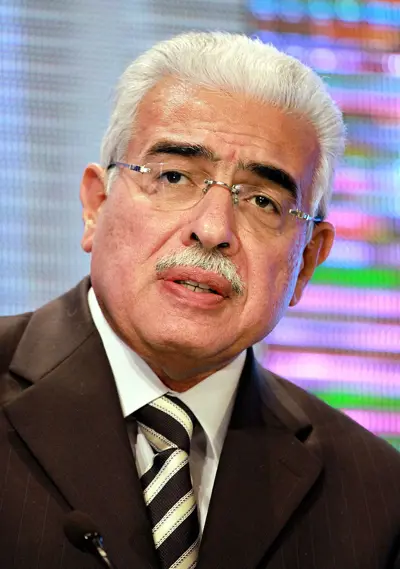
Ahmed Nazif served as the Prime Minister of Egypt from 14 July 2004 to 29 January 2011, when his cabinet was dismissed by President Hosni Mubarak in light of a popular uprising that led to the Egyptian Revolution of 2011. Nazif was Acting President of Egypt from 5 March to 15 April 2010, when President Mubarak delegated his authorities to Nazif while undergoing surgery in Germany.
