Fiorello H. La Guardia Quotes
Tell the Arch-Duchess that she may boss her own immigrants, but she can't boss the American consul.
In 1904 the Archduchess of Austria was visiting the Adriatic port of Fiume where hundreds of immigrants to America were waiting to board the ship. The nobility of the time found amusement in the poor immigrants boarding with their meager possessions and poor clothes. The Archduchess wanted the people to board 3 days early so she could watch the spectacle before she left. They would then have to stay in the steerage of the ship for 3 extra days. The American consul refused to issue the necessary papers until just before the sailing:
Fiorello H. La Guardia, 1882-1933, U. S. Congressman (Republican & Socialist, NY), New York City Mayor (Republican), Statement, Fiume, 1904
Sourced by: Eigen's Political and Historical Quotations


The “proofs” were diplomatic assurances—treaties—that England would guarantee the territorial integrity of Belgium. The British made strong diplomatic efforts to persuade Germany not to occupy Belgium. The German’s none the less send armies in under the excuse that if they did not, the French would occupy the country and have a strategic advantage over them. Diplomacy could do no more good. England had to send troops or renege on its obligations. So England was in WWI.


China had not strengthened is military as Empress Cixi had desired--{641697}. The result was a very weak country that other nations took advantage of and bullied their way to the most extraordinary concessions. This in turn, made the foreign diplomats lose respect for the Chinese officials with whom they dealt and many were treated with disrespect and abuse—like servants. This outraged influential, traditional, conservatives like Weng and began to develop the foundation of the anti-Western Boxer Movement in China.

“Dey” and “bey” were Arabic terms for the local ruler of an area.


Diplomatic recognition of the People’s Republic of China was being debated. Many of Churchill’s Conservative Party Colleagues were opposed on the grounds that diplomatic relations gives a signal of legitimacy. In the U. S. this general issue is a constant source of political controversy when diplomatic relations and talks are considered with Iran, Cuba and North Korea.


In 1983 in the wake of the Korean airliner shootdown, there were diplomatic arguments of landing rights in New York for Russian U. N. diplomats. This prompted some U. N. member nations to call for the removal of the U. N. from New York:

The Constitution was not drafted until 1787 and was ratified later. In the interim the young United States functioned under the Articles of Confederation, in a sense, our first Constitution. This clause established that the Federal Government should have the exclusive power and authority to conduct foreign affairs.


President Wilson had gone to Paris for peace treaty negotiations. Ex-President Roosevelt was on his deathbed. But even then TR was his politically contentious self.


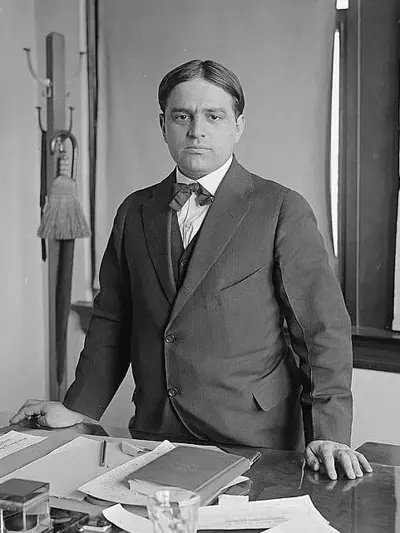
Fiorello Henry La Guardia was an American attorney and politician who represented New York in the House of Representatives and served as the 99th Mayor of New York City from 1934 to 1945. Known for his irascible, energetic, and charismatic personality and diminutive stature, La Guardia is acclaimed as one of the greatest mayors in American history. Though a Republican, La Guardia was frequently cross-endorsed by other parties, including the rival Democratic Party, under New York's electoral fusion laws.
