ALBERT I
Albert succeeded his dead uncle, Leopold, whose Belgian Congo colonization was particularly rapacious. His statement was a signal that the colonial abuses were to stop.
Germany had demanded that Belgium allow German troops to cross Belgium to the French frontier. However, King Albert was concerned that this would be a de facto German occupation of Belgium and asked for help. The British tried diplomacy but things were out of anyone’s control and the First World War ensued.
The King in his full dress military uniform had raced be carriage with his family to the Parliament building. The Germans had moved troops into Belgium and wanted that country to do nothing while they moved troops to attack France. The emotional question was answered with a shouted unanimous Oui! (Yes!). This meant that the small Belgian army would take on the huge and better equipped German Army and resist the invasion. They hoped for the assistance and intervention of England according to existing diplomatic agreements but they could not be sure. They did get the support of England and France, but later. In the meanwhile, the Germans used the Belgian defense of their land as an excuse for retribution and committing terrible war crimes and atrocities against Belgian military and civilian personnel.
The “proofs” were diplomatic assurances—treaties—that England would guarantee the territorial integrity of Belgium. The British made strong diplomatic efforts to persuade Germany not to occupy Belgium. The German’s none the less send armies in under the excuse that if they did not, the French would occupy the country and have a strategic advantage over them. Diplomacy could do no more good. England had to send troops or renege on its obligations. So England was in WWI.
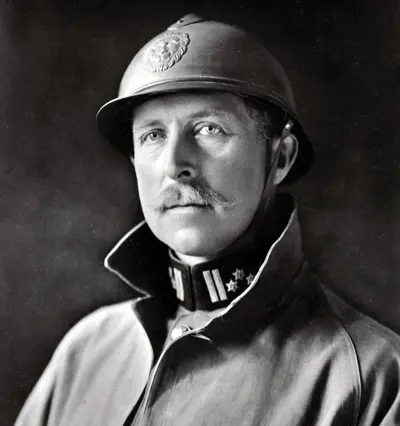
Albert I reigned as King of the Belgians from 1909 to 1934. He ruled during an eventful period in the history of Belgium, which included the period of World War I (1914–1918), when 90 percent of Belgium was overrun, occupied, and ruled by the German Empire. Other crucial issues included the adoption of the Treaty of Versailles in June 1919, the ruling of the Belgian Congo as an overseas possession of the Kingdom of Belgium along with the League of Nations mandate of Ruanda-Urundi, the reconstruction of Belgium following the war, and the first five years of the Great Depression (1929–1934). King Albert died in a mountaineering accident in eastern Belgium in 1934, at the age of 58, and he was succeeded by his son Leopold III (r. 1934–1951). He is popularly referred to as the "Knight King" (roi-chevalier or koning-ridder) or "Soldier King" (roi-soldat or koning-soldaat) in Belgium in reference to his role during World War I.
