Albert I Quotes
I make a supreme appeal for the diplomatic intervention of Your Majesty’s government to safeguard the integrity of Belgium.
Germany had demanded that Belgium allow German troops to cross Belgium to the French frontier. However, King Albert was concerned that this would be a de facto German occupation of Belgium and asked for help. The British tried diplomacy but things were out of anyone’s control and the First World War ensued.
Albert I, 1875-1934, King of Belgium, Telegram to British King George V, August 1914
Sourced by: Eigen's Political and Historical Quotations

The “proofs” were diplomatic assurances—treaties—that England would guarantee the territorial integrity of Belgium. The British made strong diplomatic efforts to persuade Germany not to occupy Belgium. The German’s none the less send armies in under the excuse that if they did not, the French would occupy the country and have a strategic advantage over them. Diplomacy could do no more good. England had to send troops or renege on its obligations. So England was in WWI.

Chamberlain’s policy was to appease Hitler and Germany to avoid war. Although he did not see Czechoslavkia as a critical British national interest and claimed he had secured peace {585941} , the reality was that he gave Germany room to start its aggression which would engulf all of Europe and much of the world. The British became the only bulwark against Hitler until the Russians stopped the Germans and America entered the war.


Charles Wilkes, a Union Navy Captain enforcing the naval blockade of the South, intercepted a British mail ship in the Caribbean and discovered two Confederate diplomats on board. He took them into custody to the cheers of Congress. England, however, was outraged that passengers—diplomats—on one of their ships was seized after boarding. This was technically an act of war. Abraham Lincoln, to the distress of many in Congress ordered the Confederate diplomats released explaining with this quotation.


Despite the fact that there were no formal political polls at the time, public opinion was very influential in curtailing what might be a tendency to use of the American military. Starting with the Cold War later, Presidents tended to use American military force regardless of public opinion or would exaggerate or lie (Vietnam and Iraq wars for example) to temporally gain some public support.

The existing treaties of many of the different European countries like the NATO Treaty obliged them to assist their allies if they were involved in war. Once Austria attacked Serbia, Russia had to assist Serbia against Austria. Germany then joined with Austria and that triggered the treaty whereby France had to support Russia. And when Germany overran Belgium to attack France, England was obligated to come to Belgium’s defense. The only country that had planned for and wanted war was Germany who used her obligation to Austria as the excuse to implement her war plans (see {642092}). The entire Western World was at war when all but one nation wanted to avoid war. The communications and diplomacy of the time could not keep up with events and one of the worst wars in history ensued.

England is entering the war against Germany The German war plan called for attacking France through Belgium. However, Belgium was intent on remaining neutral. International law prohibited a neutral country from allowing troops of either side to enter and maneuver in its territory. ({642178}). When Germany moved into Belgium, the Belgians resisted. England had a treaty with Belgium that it would protect Belgian neutrality in the event of any war in Europe. England then sided with Belgium {642175} and committed to send troops to help Belgium oust the Germans. The Kaiser was furious and could not understand that the English would go to war when there was no economic need or advantage for them to do so. Wilhelm II did not have much respect for treaties, promises, or honor other than military honor. He had earlier convinced himself that the English would not fight for a scrap of paper, especially in a land war. {642105}


1st Earl Lloyd-George of Dwyfor. He was the Chancellor of the Exchequer at the time, but gave the English response to the Morocco crisis.

The great European powers were attending an International Congress—Summit Meeting of the heads of government and their diplomats to deal with the crisis of Tsarist Russian military expansionism. None of the other European powers of the time wanted or could afford war so Russia could only be thwarted by Great Britain. There were many in England who thought that the British should not even attend and should send troops immediately. The Queen and the Royal Family were among those. At the Congress Disraeli, who had much personal affection for Queen Victoria, wanted to reassure her. 1st Earl of Beaconsfield. If the Congress did not succeed the mainland of Europe would have been at war. Disraeli obtained everything England wanted. See Russian Ambassador Prince Gortchakoff’s observation.

In 1908 Austria had designs on the Balkans, whose small countries have been fought over for years.


Hitler ridiculed the letter after receiving it in public speech.

At that time there were extensive meetings and discussions for the creation of what was to be the United Nations. The negative view of the United Nations or other international security organization is now and always has been held by a vocal minority in the United States.

His appeal was also in the name of concurring heads of state of Finland, Holland, Denmark, Norway, Luxemburg, and Sweden.


There were many who thought that the Russians would view the Mutual Security Act as aggressive and they might respond with some kind of aggressive retaliation and this could lead to war. Others felt that containment would reduce the likelihood of war.


The Republican controlled Senate had turned down the ratification of the League of Nations presented by Democratic President Wilson, and looked like they would turn down any international treaty even if presented by a Republican President. This statement allowed the treaty ratification by only a few votes. However, after that the Senate turned down our participation in the Permanent Court of Arbitration at the Hague. See {640099}.
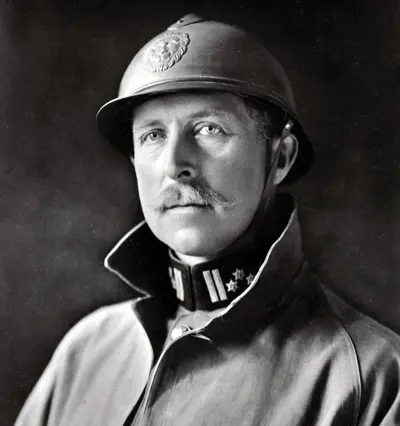
Albert I reigned as King of the Belgians from 1909 to 1934. He ruled during an eventful period in the history of Belgium, which included the period of World War I (1914–1918), when 90 percent of Belgium was overrun, occupied, and ruled by the German Empire. Other crucial issues included the adoption of the Treaty of Versailles in June 1919, the ruling of the Belgian Congo as an overseas possession of the Kingdom of Belgium along with the League of Nations mandate of Ruanda-Urundi, the reconstruction of Belgium following the war, and the first five years of the Great Depression (1929–1934). King Albert died in a mountaineering accident in eastern Belgium in 1934, at the age of 58, and he was succeeded by his son Leopold III (r. 1934–1951). He is popularly referred to as the "Knight King" (roi-chevalier or koning-ridder) or "Soldier King" (roi-soldat or koning-soldaat) in Belgium in reference to his role during World War I.
