James Monroe Quotes
In the wars of the European Powers in matters relating to themselves we have never taken any part, nor does it comport with our policy to do so.
James Monroe, 1758-1831, 5th President of the United States (Democratic Republican, VA), Message to Congress, December 2, 1823
Sourced by: Eigen's Political and Historical Quotations


This is one of the favorite quotations of American isolationists. Try as he and others did, they found the principle easier to utter than implement. Jefferson, having diplomatic experience in Europe knew far more than most Americans about foreign affairs, and he used this knowledge well on many occasions in playing off the French, Spanish and English against each other regarding their interests in America. By purchasing the Louisiana Territory from Napoleon, he not only greatly increased the size of the nation but all but eliminated Spanish aspirations in North America. At the same time the money he gave Napoleon increased the French threat to England, Spain and other European countries. So Jefferson and America was in European “broils” as the advantage and necessity outweighed the general principle and dislike for those machinations.

Adams was in agreement with his former chief George Washington {37176} as well as with many of his political foes.

Chamberlain’s policy was to appease Hitler and Germany to avoid war. Although he did not see Czechoslavkia as a critical British national interest and claimed he had secured peace {585941} , the reality was that he gave Germany room to start its aggression which would engulf all of Europe and much of the world. The British became the only bulwark against Hitler until the Russians stopped the Germans and America entered the war.


His appeal was also in the name of concurring heads of state of Finland, Holland, Denmark, Norway, Luxemburg, and Sweden.


What makes this quotation important is that the Central Intelligence Agency disobeyed the order and implemented a number of covert operations in Indonesia and CIA Director Alan Dulles did not tell the President. See {634612} for his rationale.


Germany had demanded that Belgium allow German troops to cross Belgium to the French frontier. However, King Albert was concerned that this would be a de facto German occupation of Belgium and asked for help. The British tried diplomacy but things were out of anyone’s control and the First World War ensued.


While to Madison the principle that “war is better than tribute” was “settled policy”, there were many who disagreed. See {640867} as an example.


Senator Burton was using this quotation to support the Republican isolation policy that they were advocating at the time. This quotation has been cited by almost every American politician advocating isolationism. Generally it was the Republican party that has been the isolationist advocates in America. However, after the Second World War that began to change, and in the beginning of the 21st century, the George W. Bush Administration, without any declaration of war by Congress, attacked and invaded two different countries starting the Iraq and the Afghanistan Wars. Meanwhile, the Democrats, who had been advocating American activism in foreign affairs also flip flopped and opposed foreign military intervention as Democratic President Obama withdrew American troops from the two Bush wars. The Afghanistan War was the longest war in American history.
England in this quotation claims the right to interfere in the internal affairs of another nation if there is mismanagement or crises AND her national interests are affected.


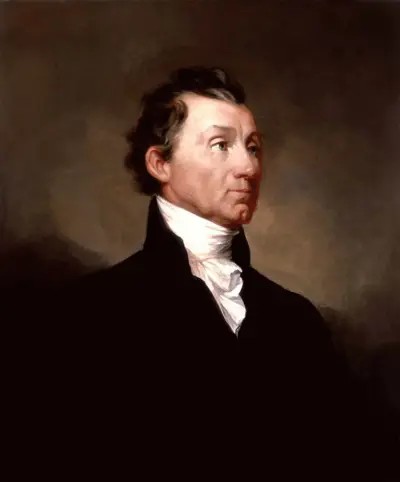
James Monroe was an American statesman, lawyer, diplomat and Founding Father who served as the fifth president of the United States from 1817 to 1825. A member of the Democratic-Republican Party, Monroe was the last president of the Virginia dynasty; his presidency coincided with the Era of Good Feelings. He is perhaps best known for issuing the Monroe Doctrine, a policy of opposing European colonialism in the Americas. He also served as the governor of Virginia, a member of the United States Senate, the U.S. ambassador to France and Britain, the seventh Secretary of State, and the eighth Secretary of War.
