David Lloyd George Quotes
If a situation were to be forced upon us in which peace could only be preserved by the surrender of the great and beneficent position Britain has won by centuries of heroism and achievement, by allowing Britain to be treated where her interests were vitally affected as if she were of no account in the Cabinet of nations, then I say emphatically that peace at that price would be a humiliation intolerable for a great country like ours to endure. National honor is no party question. The security of our great international trade is no party question; the peace of the world is much more likely to be secured if all nations realize fairly what the conditions of peace must be
1st Earl Lloyd-George of Dwyfor. He was the Chancellor of the Exchequer at the time, but gave the English response to the Morocco crisis.
David Lloyd George, 1863-1945, British Prime Minister (Liberal), Speech, Mansion House, July 21, 1911
Sourced by: Eigen's Political and Historical Quotations

Hobson, like Mark Twain in America, was a major critic of imperialism.

Many in the House were calling on England to fulfill its treaty obligations and stop Hitler and the Germans from overrunning Europe. Prime Minister Chamberlain, kept trying to appease Hitler by giving in to some of his demands. The more he gave in, the greater the demands became. Maxton was one of the few members of Parliament who wanted to give the Prime Minister more time to avoid war. Chamberlain’s efforts failed miserably and Hitler already had a huge advantage.

Germany had demanded that Belgium allow German troops to cross Belgium to the French frontier. However, King Albert was concerned that this would be a de facto German occupation of Belgium and asked for help. The British tried diplomacy but things were out of anyone’s control and the First World War ensued.

The “proofs” were diplomatic assurances—treaties—that England would guarantee the territorial integrity of Belgium. The British made strong diplomatic efforts to persuade Germany not to occupy Belgium. The German’s none the less send armies in under the excuse that if they did not, the French would occupy the country and have a strategic advantage over them. Diplomacy could do no more good. England had to send troops or renege on its obligations. So England was in WWI.


Britain was mired in Iraq. They had, as the U. S. would do about 80 years later, gone into Iraq without a viable exist strategy.


Cooper had resigned from the government after Prime Minister Neville Chamberlain returned from his meeting with Hitler with the naïve view that peace could be made with Germany. There was a significant pro-Fascist, Nazi sympathetic segment of British society including the former King, the Duke of Winsdor, who were in favor of making an alliance with Hitler and not opposing the Nazi “reform” of Europe. Surrender was his word for their alternative.

This is the kind of threat that was used by Germany before the First World War. It worked with Turkey, but King Albert realized that being an “ally” of Germany meant losing independence anyway. Belgium would not join Germany, so the Germans invaded Belgium in 1914. Belgians fought with the allies and at the end of WWI, they were able to rebuild their independent state and thrive until they were again invaded by Germany in WWII. Turkey, in contrast, lost their entire empire, as a result of their fighting as German allies in WWI.


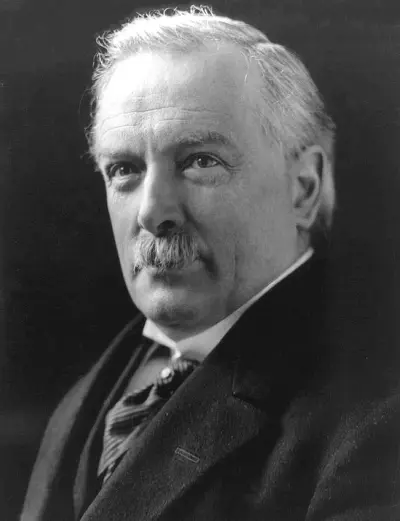
David Lloyd George, 1st Earl Lloyd-George of Dwyfor, OM, PC was a Welsh statesman who served as Prime Minister of the United Kingdom from 1916 to 1922. He was the final Liberal to hold the post of prime minister, but his support increasingly came from the Conservatives who finally dropped him.
