John A. Hobson Quotes
... the notion that the greater the preparation for war the smaller the probability of its occurrence might well appear a reductio ad absurdum of militarism, implying, as it does, that the only way to secure an eternal world peace is to concentrate the entire energy of all nations upon the art of war ...
Hobson, like Mark Twain in America, was a major critic of imperialism.
John A. Hobson, 1858—1940, English economist, social scientist & political critic, The Political Significance of Imperialism, Part II: The Politics of Imperialism, Imperialism, A Study, 1902
Sourced by: Eigen's Political and Historical Quotations


3rd Earl Russell of Kingston. The military weak nations agreed with him, but the militarily strong ones did not—especially America and England which had the Atomic Bomb when others did not.


Essentially similar ideas were expressed earlier by George Washington and in antiquity by Vegetius and Horace.


At that time there were extensive meetings and discussions for the creation of what was to be the United Nations. The negative view of the United Nations or other international security organization is now and always has been held by a vocal minority in the United States.

There were many who thought that the Russians would view the Mutual Security Act as aggressive and they might respond with some kind of aggressive retaliation and this could lead to war. Others felt that containment would reduce the likelihood of war.

This was written when the United States was not a dominant military power. At the beginning of the 20th century, the U. S. had the same size military as Argentina. It was France, German, Turkey and England who had the military superiority and it was they who tended to find excuses for war. After WWII, the U. S. was dominant and was involved with a number of wars and military incursions, often with nations that had not attacked the U.S. Korns’ principle was most dramatic when the George W. Bush administration invaded Iraq on the excuse that the Iraqis were developing weapons of mass destructions and then might attack the United States. After the successful invasion, the excuse was shown to be hollow as there were no signs of sophisticated weapons development.


stating that war was obsolete See {640087} for the quotation of exactly what Angell wrote.


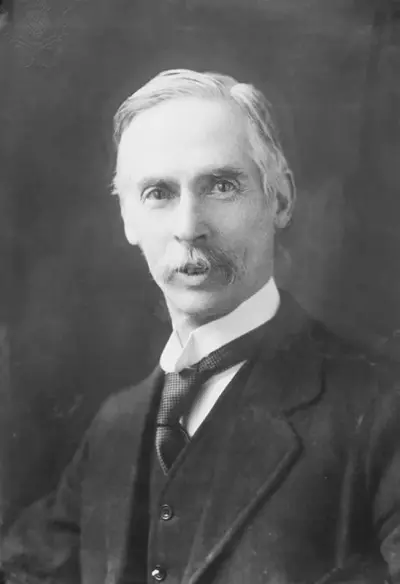
John Atkinson Hobson was an English economist and social scientist. Hobson is best known for his writing on imperialism, which influenced Vladimir Lenin and his theory of underconsumption.
