HIROHITO
(Emperor Hirohito)
Ironically, the Japanese Government and military were so polarized that it took several days for the authorities to get together and agree on a course of surrender action. The second atomic bomb dropped on Nagasaki speeded things up.
In Japan at that time there was no civilian control of the military and the military resented any attempt at the civilian government to influence military affairs in any way whatsoever. At the same time the military often tried to influence the politics of civilian government. The Emperor made this feeble effort to inhibit that, but as World War II proved, he had not tried very hard to prevent the military from dominating the country.
The Emperor was writing to his son to explain the defeat of Japan. In what was a bit of revisionist history, the Emperor neglected to mention that with the exception of some of the incursions in China, Hirohito had personally approved every Japanese invasion including Pearl Harbor. Further, it was he who had approved the orders that Japanese troops should fight to the death rather than retreat or surrender.
At that point the Japanese were losing the war on every front. It is not clear whether Hirohito would actually have done such and not tried to escape in the end, however he certainly expected his subjects, military and civilian to do so. That expectation and the behavior of the Japanese troops fighting to the death on many islands was a powerful factor in leading Truman, Marshall and other key American leaders to use the Atomic Bomb. See Marshall: {641063}
It was never submitted as evidence in any proceeding or made a part of the U. S. investigatory record of war crimes of World War II. Nor was it ever found in Japan in the official records. The only copy was found in 2003 at the home of Bonner F. Fellers one of MacArthur’s top aids in the Japanese Occupation. Fellers and McArthur advocated not further investigating or trying the Japanese Emperor either because they, believed he was not guilty or because they thought his trial would be too disruptive to the occupation. The authenticity of this monologue has not been verified. Apologists for the Emperor argue that it shows that he was a virtual prisoner of the militarists and unable to stop the war or any of the war crimes; others argue that the Japanese military would never have gone against the will of the Emperor and that this document was probably prepared with the coaching of General Fellers as ex post facto “evidence” of the Emperor’s innocence. See {643148} and {601309} for examples of Fellers manipulating the “evidence.”
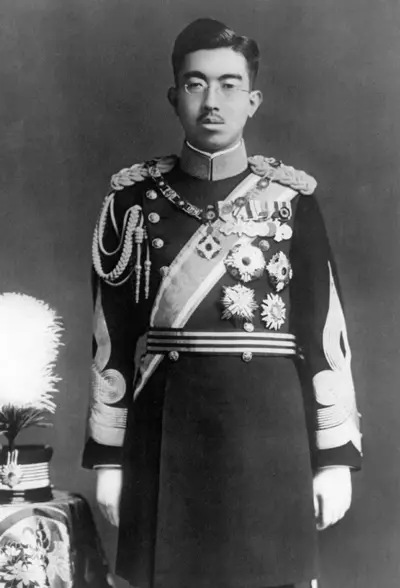
Emperor Shōwa, better known in English by his personal name Hirohito (裕仁), was the 124th emperor of Japan according to the traditional order of succession, ruling over the Empire of Japan from 25 December 1926 until 2 May 1947, after which he was Emperor of the state of Japan until his death. He was succeeded by his fifth child and eldest son, Akihito. Hirohito and his wife, Empress Kōjun, had seven children, two sons and five daughters. By 1979, Hirohito was the only monarch in the world with the title "emperor." Hirohito was the longest-lived and longest-reigning historical Japanese emperor and one of the longest-reigning monarchs in the world.
