Hirohito Quotes
Defeat [in World War II] was better for the nation than if we had become extremely militaristic as a result of victory.
Hirohito, 1901-1990, Emperor of Japan, 1946, Quoted in Kinoshita, Sukkin nisshi
Sourced by: Eigen's Political and Historical Quotations


1914 was the outbreak of WWI in which all the belligerents had very different interests and reasons for war—even allies on the same side greatly differed as to their motivation for fighting.

Peruvian Revolutionary Group. This speech was made from prison.


stating that war was obsolete See {640087} for the quotation of exactly what Angell wrote.


Germany had just attacked Russia with whom it had a treaty. For a while, Hitler paid little attention to Italy and just gave their “ally” orders and instructions. Italian public opinion was concerned about the same question. See {627973} .

In 1918 the Treaty of Versailles—peace treaty ending WWI—was signed. Many Germans felt that their defeat in WWI forced them to sign the treaty which weakened Germany and assured that they would be a 2nd rate power thereafter. After that Germans blamed every negative aspect of their government, economy and society on the treaty that was “forced” on them. Nazism was a consequence of these feelings, and the Nazis adopted policies and practices to get around their anti-military obligations and have a strong government so that the allies could not enforce the treaty obligations on Germany.

Russia suffered enormous casualties in WWII where over 20 million Russians were killed. None the less, at the end of the war Europe was devastated with no viable economy. The fascist states and the democracies were all devastated. But Russia was still functioning. Instead of crediting the enormous Russian land mass, the success of the Russian Army, and the enormous amount of aid that the U. S. had provided, Stalin concluded that the reason was the Soviet Communist System.


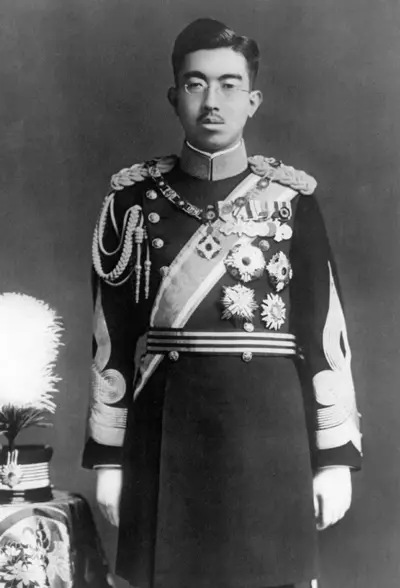
Emperor Shōwa, better known in English by his personal name Hirohito (裕仁), was the 124th emperor of Japan according to the traditional order of succession, ruling over the Empire of Japan from 25 December 1926 until 2 May 1947, after which he was Emperor of the state of Japan until his death. He was succeeded by his fifth child and eldest son, Akihito. Hirohito and his wife, Empress Kōjun, had seven children, two sons and five daughters. By 1979, Hirohito was the only monarch in the world with the title "emperor." Hirohito was the longest-lived and longest-reigning historical Japanese emperor and one of the longest-reigning monarchs in the world.
