DOUGLAS MACARTHUR

World War I veterans had been promised bonuses for their service, but Congress and the President would not deliver. The economy was terrible and thousands of veterans came to Washington, set up a camp in Anacostia, and asked for help and their bonuses. Hoover had given orders to General Douglas MacArthur to remove the protesters from government buildings, but MacArthur, establishing a pattern that he would follow throughout his career, exceeded he orders and chased the protesters all the way back to their tent camp and then destroyed the camp. The Great Depression was raging and the protesters had no other place to live, and Hoover opposed any direct federal aid to the poor and needy making the Depression even worse. The public reaction was shock and anger. Hoover, however, demonstrating political character and integrity, took the responsibility and did not blame MacArthur. It was the nail in Hoover’s political coffin. Roosevelt easily won the election.


General Douglas MacArthur had proposed extending the Korean War into China.


Allied calls for indictment of Emperor Hirohito. war crimes trials of Tojo and other Japanese leaders Senior officer responsible for investigating Japanese WWII war criminals. Fellers was the officer who had previously done the “research and investigation for his boss General Douglas MacArthur who had recommended no prosecution for the Emperor. See {605727}. Yonai was to get word to General Tojo and Admiral Shimada, already indicted as war criminals to minimize the role of the Emperor who had personally approved of Pearl Harbor and every major subsequent act of Japanese aggression. Shimada was “on board” but there were doubts about whether Tojo would go along with the deceptive exoneration of the Emperor.


After Truman's firing of General Douglas MacArthur;


The Korean War armistice left a vulnerable border between North and South Korea and approximately 40,000 American troops were necessary for decades thereafter to protect the border.

MacArthur had been the Commander of our Military Forces in Korea. He had a huge ego, and he wanted to cross the border and attack China since Chinese Troops were aiding the North Vietnamese. He had previously assured the Joint Chiefs of Staff and the President that the Chinese would not send troops into Korea, but he was then wrong. And when they had attacked, they had erased the territorial gains that MacArthur had previously gained. The Joint Chief’s of Staff, the Secretary of Defense and the Secretary of State had decided upon a strategy which this time did not follow MacArthur’s strategic advice. The President approved the strategy, but MacArthur spoke and acted contrary. The President met with MacArthur and reiterated the strategy that the President approved. But MacArthur did not follow the orders of the Joint Chiefs. At the time, he and Eisenhower were America’s two most famous military leaders, and of the two MacArthur was senior and thought that he should be President. After he was fired, MacArthur addressed a Joint Session of Congress and gave his "Old Soldiers Never Die" speech which was his first active step towards the Presidency. It was a very sentimental speech with little content and nothing about why he had disobeyed orders. He was totally shocked when it was Eisenhower who was selected to run for President and not him.
MacArthur had been the Commander of our Military Forces in Korea. He had a huge ego, and he wanted to cross the border and attack China since Chinese Troops were aiding the North Vietnamese. He had previously assured the Joint Chiefs of Staff and the President that the Chinese would not send troops into Korea, but he was then wrong. And when they had attacked, they had erased the territorial gains that MacArthur had previously gained. The Joint Chief’s of Staff, the Secretary of Defense and the Secretary of State had decided upon a strategy which this time did not follow MacArthur’s strategic advice. The President approved the strategy, but MacArthur spoke and acted contrary. The President met with MacArthur and reiterated the strategy that the President approved. But MacArthur did not follow the orders of the Joint Chiefs. At the time, he and Eisenhower were America’s two most famous military leaders, and of the two MacArthur was senior and thought that he should be President. After he was fired, MacArthur addressed a Joint Session of Congress and gave his "Old Soldiers Never Die" speech which was his first active step towards the Presidency. It was a very sentimental speech with little content and nothing about why he had disobeyed orders. He was totally shocked when it was Eisenhower who was selected to run for President and not him.

MacArthur wanted to widen the Korean war and use nuclear weapons against Communist China, after erroneously assuring Truman and other American leaders that his tactics in North Korea would not cause Chinese troops to enter the war. MacArthur would not obey the orders of the civilian government and was thus fired.

Sarah Bernhardt was the most famous dramatic actress of the time who had an “over the top” dramatic style. MacArthur, a shameless self-promoter, was fond of dramatics and histrionics in his reports to his superiors and his relationship with other officers and the press.

He was assessing him with the demagogue Huey Long and determining that MacArthur was more dangerous, This was based on his brutal suppression of the Veterans who protested and camped in Washington to get the Bonus that Congress had promised them from WWI but would not appropriate the money, MacArthur’s huge ego and ambition, and his penchant for self-promotion. FDR did not at the time know of course that MacArthur would disobey his orders and almost start WWIII later by attacking China in the Korean War. President Truman fired MacArthur. See {638721} for the way FDR tried to handle him. In 2014, historian Mark Perry, would use this quotation as the title of his biography of MacArthur.

MacArthur had been fired for disobeying the orders of his superior Army Officers, The Secretary of Defense and President Harry S Truman. However, he had many supporters among the right wing of the Republican Party. Short was obviously one of them.

The only soldier ever so honored
The only soldier ever so honored. MacArthur had a huge ego, and was a shameless self-promoter. However he was never secure enough to have a personal staff of strong independent thinkers the way Dwight Eisenhower and most other high military officers did. The men who stayed on MacArthur’s personal staff tended to be sycophants and toadies and treated him like royalty, hence the remark by General Marshall.


In the late 1930's Dwight Eisenhower served as an aide to MacArthur in the Philippines when President Quezon offered to make MacArthur "Grand Marshall of the Philippines" and Eisenhower thought it inappropriate for an American general officer to have such a grandiose title:
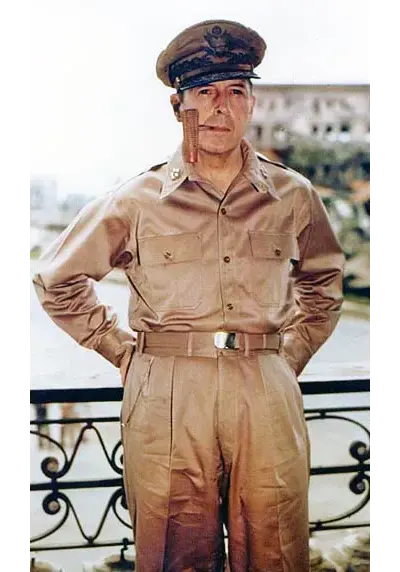
- Born: January 26, 1880
- Died: April 5, 1964
- Nationality: American
- Profession: Soldier
General of the Army Douglas MacArthur was an American five-star general and Field Marshal of the Philippine Army. He was Chief of Staff of the United States Army during the 1930s and played a prominent role in the Pacific theater during World War II. He received the Medal of Honor for his service in the Philippines campaign, which made him and his father Arthur MacArthur Jr. the first father and son to be awarded the medal. He was one of only five to rise to the rank of General of the Army in the U.S. Army, and the only one conferred the rank of field marshal in the Philippine Army.
