Bonner F. Fellers Quotes
To counter this situation it would be most convenient if the Japanese side could prove to us that the emperor is completely blameless. We think the forthcoming trials offer the best opportunity to do that. Tojo, in particular, should be made to bear all responsibility at his trial. In other words I want you to have Tojo say as follows: “… I had already decided to push for war even if his majesty the Emperor was against going to war with the United States.”
Allied calls for indictment of Emperor Hirohito. war crimes trials of Tojo and other Japanese leaders Senior officer responsible for investigating Japanese WWII war criminals. Fellers was the officer who had previously done the “research and investigation for his boss General Douglas MacArthur who had recommended no prosecution for the Emperor. See {605727}. Yonai was to get word to General Tojo and Admiral Shimada, already indicted as war criminals to minimize the role of the Emperor who had personally approved of Pearl Harbor and every major subsequent act of Japanese aggression. Shimada was “on board” but there were doubts about whether Tojo would go along with the deceptive exoneration of the Emperor.
Bonner F. Fellers, *, Army General, Meeting with Admiral and Navy Minister Mitsumasa Yonai and his interpreter Shuichi Mizota, March 6, 1946
Sourced by: Eigen's Political and Historical Quotations


none of a prosecutorial nature At the end of World War II, a major issue was whether to try the Japanese Emperor as a War Criminal. He had been the Commander and Chief of the Japanese Armed Forces, personally appointed virtually every military of civilian official of consequence—who served at his pleasure, had personally approved every major Japanese invasion (except some of the China incursions) and attack (including Pearl Harbor), personally allowed the execution of American captured prisoner of war flyers from the Doolittle raid on Tokyo, and was knowledgeable about most of the Japanese war crimes. However, General MacArthur thought him a stabilizing force in post-war Japan and never did a detailed investigation of his possible indictment. Instead he wrote this magnificently artfully worded telegram to General Eisenhower. MacArthur wanted to shock the Truman administration into allowing him to reduce the Emperor’s dictatorial powers but retain not only the monarchy but avoid indicting Hirohito. He succeeded, and there was no serious investigation of the Emperor as a possible war criminal despite many calls for Hirohito’s indictment from a few allied politicians {43748} and some American and allied veterans groups. Few could argue with the pragmatic result and the rehabilitation of Japan, but the justice of the decision—or lack thereof—has been debated since. See {43823}, {43824}, {603499}, {43831}, {603752}, {43841}, {601309}, {593777}, {43997}, {43999}, {594634}

It was never submitted as evidence in any proceeding or made a part of the U. S. investigatory record of war crimes of World War II. Nor was it ever found in Japan in the official records. The only copy was found in 2003 at the home of Bonner F. Fellers one of MacArthur’s top aids in the Japanese Occupation. Fellers and McArthur advocated not further investigating or trying the Japanese Emperor either because they, believed he was not guilty or because they thought his trial would be too disruptive to the occupation. The authenticity of this monologue has not been verified. Apologists for the Emperor argue that it shows that he was a virtual prisoner of the militarists and unable to stop the war or any of the war crimes; others argue that the Japanese military would never have gone against the will of the Emperor and that this document was probably prepared with the coaching of General Fellers as ex post facto “evidence” of the Emperor’s innocence. See {643148} and {601309} for examples of Fellers manipulating the “evidence.”


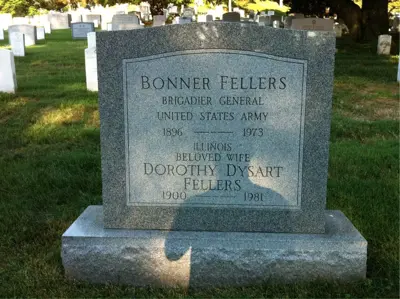
Bonner Frank Fellers was a US Army officer who served during World War II as military attaché and director of psychological warfare. He is notable as the military attaché in Egypt whose extensive transmissions of detailed British tactical information were intercepted by Axis agents and passed to German Field Marshal Erwin Rommel for over six months, which contributed to disastrous British defeats at Gazala and Tobruk in June 1942. He was considered a protégé of General Douglas MacArthur.
